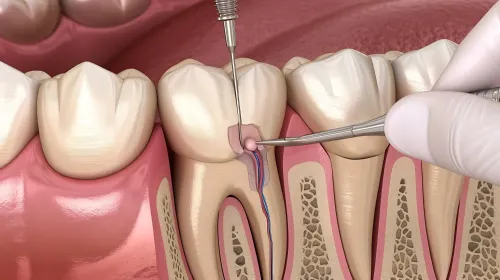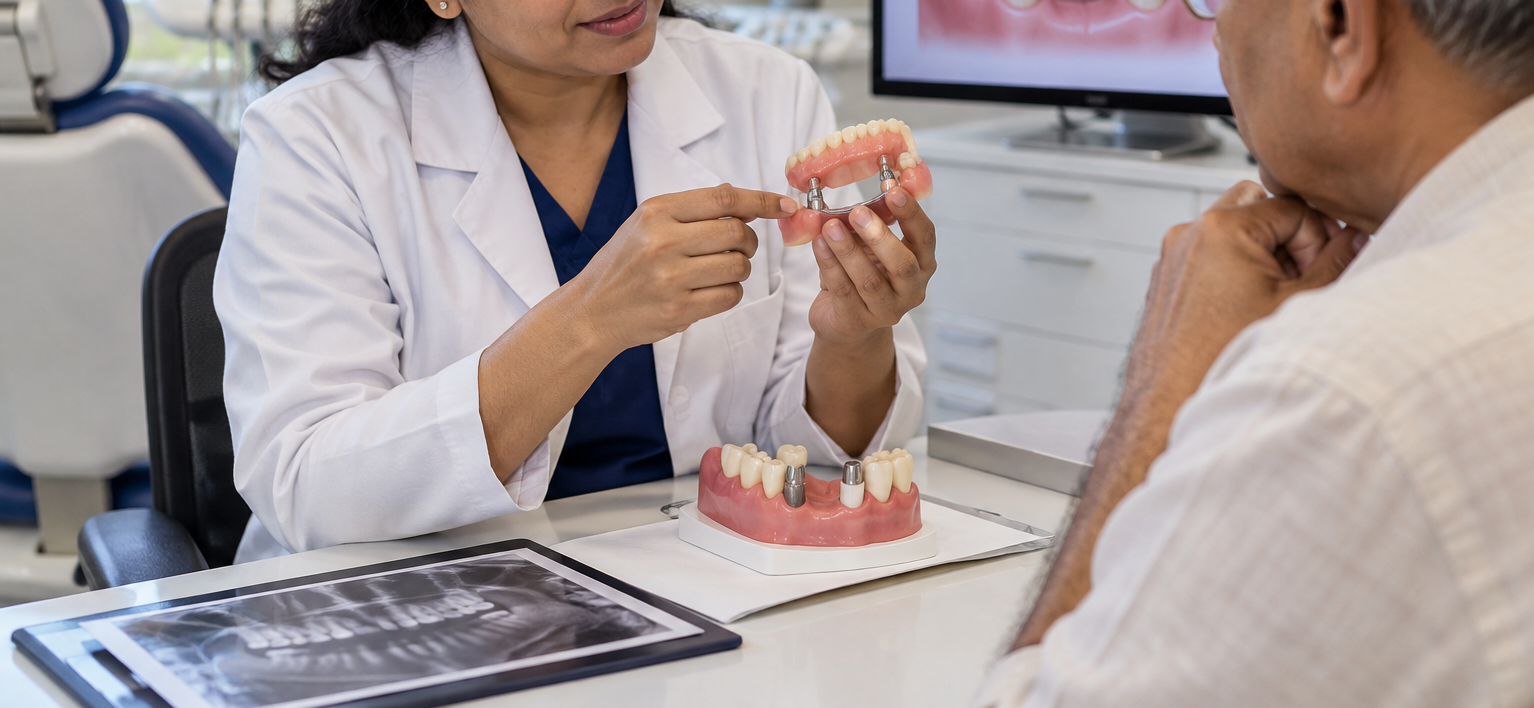
Replacing multiple missing teeth becomes more challenging when only a limited number of natural teeth remain. Conventional removable dentures may be one possibility, while implants, fixed prostheses, and specialized removable designs can provide alternatives depending on the condition of the mouth.
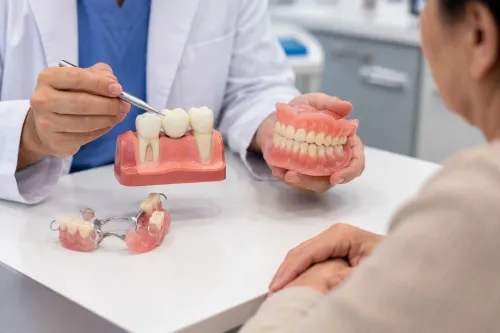
Telescopic Dentures are a type of removable prosthetic solution that may use selected remaining teeth as part of the support and retention system.
For patients in Madhura Nagar, Hyderabad, they may be discussed when preserving suitable natural teeth is desirable within a broader rehabilitation plan.
How Telescopic Dentures Work
The design typically involves specially prepared supporting teeth fitted with primary copings. Corresponding components within the removable prosthesis fit over these supports.
This telescopic relationship can provide retention while allowing the denture to remain removable for cleaning.
The design differs considerably from a basic conventional removable denture and requires detailed prosthodontic planning.
Who May Be Considered for This Approach
Telescopic treatment may be explored in selected patients who have multiple missing teeth but retain certain teeth that can potentially serve as supports.
However, simply having a few remaining teeth does not automatically make someone suitable.
The supporting teeth need assessment for:
- Gum health
- Bone support
- Mobility
- Root condition
- Decay
- Position
- Structural strength
- Long-term maintainability
Teeth with a poor prognosis should not be relied upon merely to avoid extraction.
How Does It Compare With Conventional Dentures
A conventional removable denture generally derives support from oral tissues and any remaining teeth according to its design.
Telescopic prostheses use specifically prepared supporting teeth to contribute to retention and stability.
The trade-off is that treatment is more technically involved and requires careful maintenance of both the prosthesis and supporting teeth.
What About Dental Implants
Implants can provide another method of supporting replacement teeth, but they are not automatically suitable for every person.
Available bone, medical considerations, treatment preferences, anatomy, cost, and willingness to undergo surgical treatment can all influence the decision.
For some complex cases, a dentist may compare tooth-supported, implant-supported, and conventional removable solutions before making a recommendation.
Maintenance Should Influence the Decision
Patients considering telescopic prostheses should be comfortable removing and cleaning their dentures regularly.
Supporting teeth require meticulous plaque control because they remain vulnerable to gum disease and decay.
Regular dental reviews can help monitor:
- Supporting teeth
- Gum tissues
- Denture fit
- Bite
- Prosthetic components
- Areas of wear
Maintenance is not optional simply because the replacement teeth are artificial.
What Should You Ask Before Treatment
Before committing to complex prosthetic care, ask which natural teeth are being preserved and why.
Patients should also understand what happens if one supporting tooth develops problems later and whether the prosthesis can be modified.
At Sri Krishna Multispecialty Dental and Implant Studio, evaluation of remaining teeth, gum support, bite, and missing-tooth pattern can help determine whether a telescopic design is worth considering.
For Hyderabad patients with extensive tooth loss, comparing available options is especially valuable because the most appropriate solution may not be the same for every mouth.
Telescopic dentures can provide a useful approach in carefully selected complex cases, particularly when suitable remaining teeth can contribute to support. Their success depends on appropriate case selection, precise prosthetic planning, excellent hygiene, and ongoing maintenance rather than the denture design alone.
Keywords