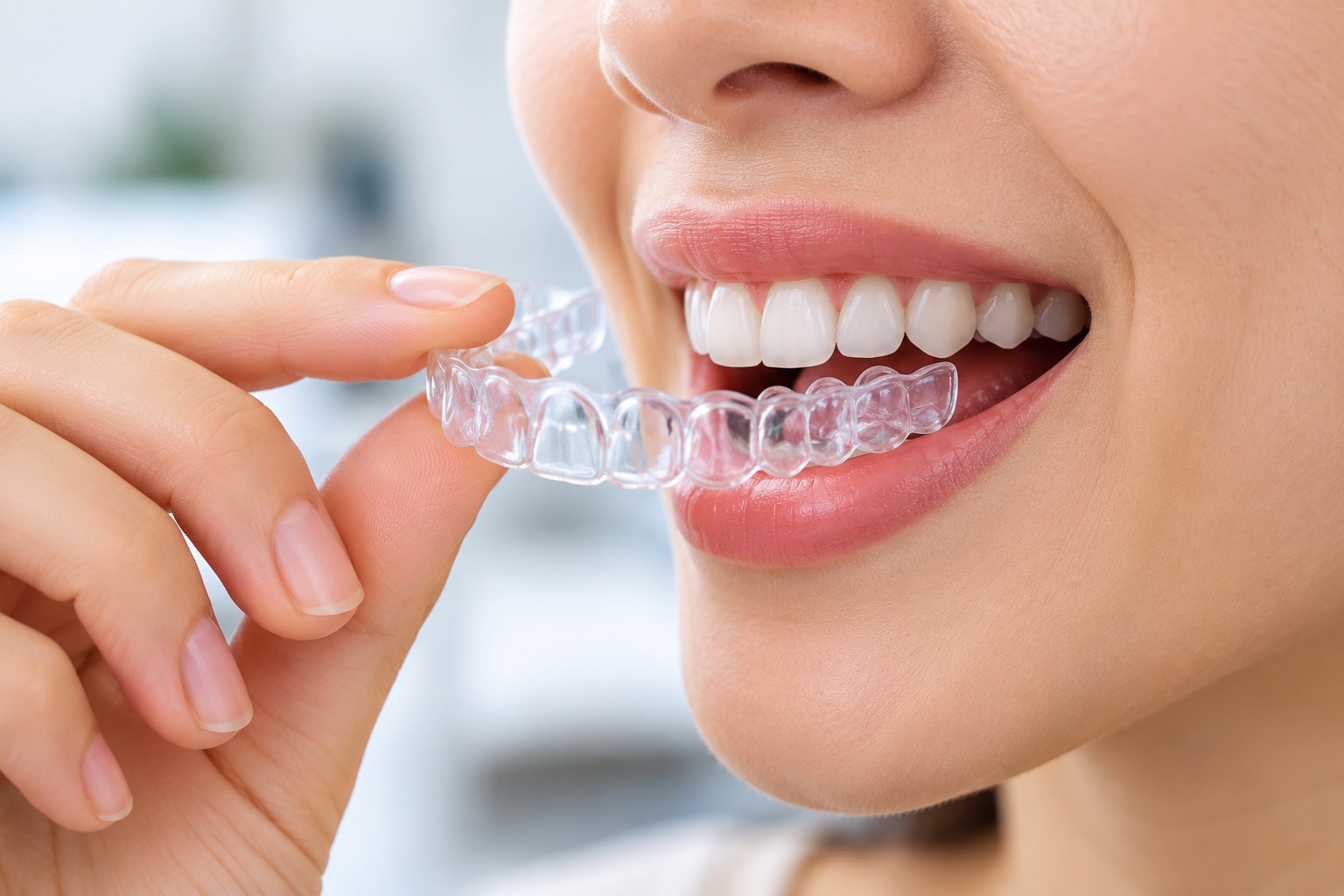
A sequence of removable trays can guide teeth into new positions by applying small, planned forces, but the result depends on the movements required and how consistently you wear each tray. You will be able to compare aligners with fixed braces, understand the treatment stages, and identify the checks that determine whether aligners are a sensible choice for your teeth.
Key takeaways
- Aligners move teeth with planned pressure from a sequence of custom trays.
- Remove trays for eating and cleaning, then wear them as directed each day.
- A digital scan maps tooth movement before your first tray is made.
- Retainers help hold teeth in their new positions after treatment.
How a series of clear trays moves teeth
A clear aligner moves teeth through close contact, not through a wire. Each set of custom-made trays fits over the crowns of your teeth and presses selected surfaces in planned directions. Because the trays are removable, their close fit supplies the grip needed to transfer controlled pressure without brackets bonded to enamel.
The pressure is light and sustained. It compresses the periodontal ligament on one side of a tooth and stretches it on the other; bone then remodels around the changing position. Each thermoplastic tray is shaped slightly differently, so it makes a small movement before the next tray continues the sequence.
Teeth do not jump into their final positions after one set.
Tray contact alone is not enough for every movement. Your treatment plan may include:
- Tooth-coloured attachments bonded temporarily to selected teeth, giving the tray extra points to grip and push.
- Interproximal reduction, which removes a carefully measured, very small amount of enamel between teeth to create space.
- Elastics connected to the trays, which add force for certain bite corrections.
A tray that no longer fits closely is not “working harder”; it signals incomplete tracking. The tooth may not have followed the planned movement, or the tray may be damaged. Continuing without an assessment can make later trays ineffective and lead to a replacement or refinement series.
What daily life is different without metal brackets
The biggest daily difference is that aligners come out for meals and hygiene, while metal braces stay attached to your teeth. That changes your routine, but it does not remove the need for discipline: most treatment plans require about 20–22 hours of wear each day.
| Feature | Aligners versus metal braces |
|---|---|
| Appearance | Clear trays are less noticeable, but tooth-coloured attachments can show. Brackets and wires remain visible. |
| Comfort | Aligners can cause pressure, tenderness, speech changes and extra saliva when a new tray is inserted. Braces can irritate the cheeks and lips with brackets or wires. |
| Meals | Remove aligners before eating with aligners, then rinse or brush before replacing them. Braces stay in place and require care around hard, sticky or chewy foods. |
| Cleaning | Removable orthodontic trays allow normal brushing and flossing without working around brackets. Replace a tray over unclean teeth and trapped plaque can contribute to gum inflammation, decalcification and cavities. |
| Appointments | Aligner visits check fit, tooth movement and whether refinements are needed. Braces visits adjust wires and brackets and address loose components. |
Carry a case, not a napkin, for your trays. Wrapping them in tissue makes accidental disposal easy. Drink water while wearing them; remove them for sugary drinks, tea, coffee and other beverages that can stain the tray or expose teeth to fermentable carbohydrates.
Attachments can collect plaque at their edges, so brushing and flossing still matter. Missing wear time can let teeth rebound and leave the next tray too tight. Both treatments usually require retainers after active movement ends.
What happens from the first scan to the final tray
The first appointment is diagnostic, not a tray fitting. An orthodontic examination checks whether your teeth, gums, bone support and bite can tolerate movement.
1. Your clinician records photographs and X-rays, reviews existing fillings or crowns, and checks root positions, jaw relationships and eruption. Treating active gum inflammation or inadequate bone support first protects you from avoidable complications.
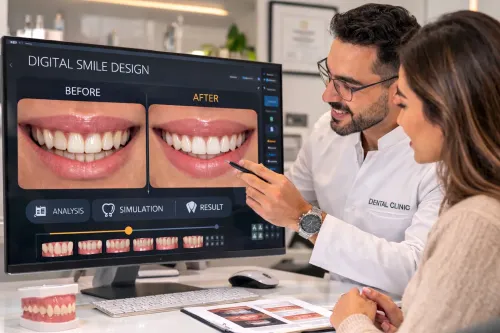
2. An intraoral scan creates a three-dimensional record of your teeth without impression paste. The clinician uses it with your examination findings for digital treatment planning, which maps proposed movements and estimates the tray sequence. The screen simulation is a plan, not a guarantee.
3. At tray delivery, each aligner is checked for fit and you receive instructions for insertion, removal and cleaning. Attachments or small tooth-coloured shapes may be added to improve grip. Wear the trays for about 20–22 hours daily, removing them for meals, drinks other than water, brushing and flossing.
4. Progress checks compare your teeth with the plan and test whether each tray is tracking. Bring every tray to appointments and report sharp edges, persistent pressure or a tray that will not seat fully. A loose fit can require an additional scan or replacement tray.
5. If movement falls behind, the clinician orders a refinement series rather than forcing the next tray. That adds time and trays beyond the original estimate. After active movement ends, retainers—removable, fixed or both—help limit relapse and usually require long-term nighttime wear.
Which dental problems aligners can and cannot move predictably
Aligners are most predictable for mild-to-moderate crowding and spacing, mild rotations, and selected bite correction in fully erupted teeth. They become less reliable as movement shifts from tipping the crown to moving the whole tooth, its root, or the jaw.
| More predictable | Less predictable | What changes the plan |
|---|---|---|
| Mild crowding or spacing | Severe crowding or large gaps | Fixed braces, extractions or other space management |
| Small rotations | Rotations of canines and premolars | Attachments, auxiliaries or another appliance |
| Limited overbite or overjet correction | Major open bites, deep bites or severe bite discrepancies | Fixed appliances or jaw surgery |
| Simple crown movement | Root torque, extrusion and bodily translation | A longer or combined treatment plan |
Your dental health must be stable before scanning. Untreated cavities, gum inflammation, active periodontal disease, loose teeth or poor plaque control can worsen during treatment because trays cover the tooth surfaces. Complete necessary fillings and gum treatment first, then confirm that you can clean around attachments and the tray edges.
Ask how your growth stage affects the plan. Aligners work best when the permanent teeth have erupted and the jaw relationship is stable; ongoing growth, unerupted teeth or a developing skeletal discrepancy can change the result. A clinical examination with photographs and appropriate X-rays—not a scan alone—should identify:
- Whether the movement is dental or skeletal
- Whether impacted teeth or missing space are involved
- Whether attachments or fixed appliances are needed
- Whether surgery or extraction-based treatment is the safer route
A difficult movement is not automatically impossible, but it demands a realistic plan, closer checks and acceptance that refinements or another appliance may be necessary.
How wear discipline and retention affect the result
Plan on wearing each aligner for 20 to 22 hours per day. Remove it only for meals, drinks other than water, brushing and flossing, then clean your teeth before replacing it.
Tray compliance matters because the planned force works only while the tray is seated. Missed wear can let teeth rebound, create gaps between the plastic and teeth, and leave the next tray too tight or unable to fit.
Do not jump ahead to the next tray or force a painful one; contact your provider, who may extend the current tray, replace it or rescan your teeth.
Ask these questions at your assessment:
- What movement is realistic for my bite, root positions and available bone?
- Will you take photographs and radiographs, and check my gums, existing fillings, jaw relationship and unerupted teeth?
- How will you monitor whether each tooth is tracking rather than relying only on the digital simulation?
- If tracking fails, are refinement trays included in the plan, and how could they change the treatment time?
- What is the replacement process if I lose or break a tray?
- Which orthodontic retainers will I need after the final aligner, and how long will I wear them?
At Sri Krishna Multispecialty Dental & Implant Studio, these questions help you judge whether the proposed plan addresses dental health and movement limits, not just the appearance of a projected smile.
Retention is ongoing maintenance, not an optional final step. Teeth can shift after active treatment, so long-term nighttime wear of removable retainers, fixed retainers, or both is commonly advised.
Related service
Braces & Aligners Orthodontic Treatments Straighter Teeth, Healthier Bite, and Confident Smiles for All Ages Orthodontics is the specialty of aligning teeth and... View service → |
Frequently asked questions
How do clear aligners move teeth without wires?
Each close-fitting tray presses selected tooth surfaces in planned directions, moving teeth in small stages.
What is daily life like with clear aligners?
You remove the trays for eating and cleaning, then put them back in as directed.
What happens before you receive your first aligner?
A dental examination and digital scan help plan tooth movement and create the treatment sequence.
Which dental problems can clear aligners treat predictably?
They work best for cases with tooth movements that can be planned and controlled through close-fitting trays; complex movements require an assessment.
Why do wear discipline and retainers matter?
Skipping wear reduces the trays’ intended effect, while retainers help prevent teeth from shifting after treatment.