A smile can look uneven even when the teeth are straight, or appear artificial when every tooth is made the same length and shade. A sound plan examines the teeth, gums, lips, face, speech and bite together, then lets you compare realistic treatment paths before irreversible work begins.
Key takeaways
- Compare facial and dental midlines before changing tooth shape or position.
- Use photographs, scans, videos and bite records to test the proposed smile.
- Approve a treatment sequence only after reviewing tooth, gum and bite effects.
- Confirm limits, alternatives, maintenance and expected changes before treatment begins.
What Does a Balanced Smile Actually Involve?
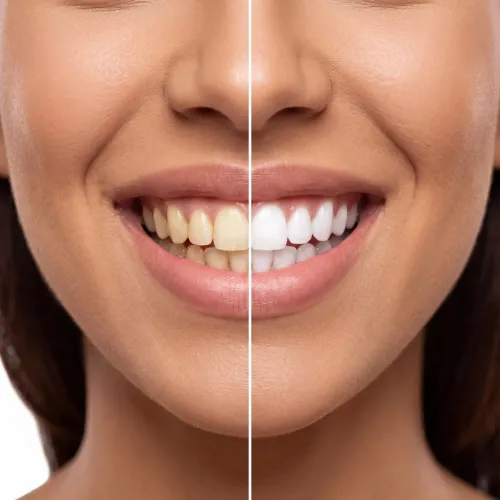
A balanced smile is judged against your whole face and bite, not by isolated tooth measurements. Before recommending change, a clinician compares the facial midline, dental midline, incisal edge position and smile arc, then checks lip mobility, gingival display, facial asymmetry and tooth display at rest and during smiling.
| Feature | What the clinician assesses | Why it matters |
|---|---|---|
| Midlines and proportions | Facial midline, dental midline, facial proportions, and tooth width-to-length ratio | A dental midline does not need to be forced onto the facial midline if that would make the smile look less balanced. |
| Teeth and edges | Tooth shape, visible tooth size, incisal edge curvature, spacing and wear | The frequently quoted golden proportion is not a universal rule; tooth proportions must suit your face and gingival architecture. |
| Gums and lips | Gum symmetry, gingival margins, recession, gingival display and lip support | The right change may involve gum contouring or orthodontic movement rather than adding tooth material. |
| Function | Occlusal contacts, anterior guidance, chewing, speech, lip closure, clenching or grinding and hygiene access | A visually attractive design can fail if it changes speech, strains the bite or cannot be maintained. |
Active decay, gum inflammation, infection and unstable restorations must be controlled before cosmetic planning. A diagnostic wax-up or trial smile can expose excessive length, poor lip support or an unnatural edge before treatment begins.
Which Records Are Needed, and What Does Each One Show?
An examination during a smile design consultation checks active caries, gum inflammation, tooth wear, restorations, tooth mobility, bite contacts, lip movement, speech and hygiene access. Treating disease first matters: a cosmetic plan built on unstable teeth or inflamed gums can fail before its appearance is properly judged.
| Record | What it shows | Planning use |
|---|---|---|
| Clinical examination | Tooth condition, gum levels, occlusion, lip movement and speech | Identifies disease, functional limits and procedures needed before cosmetic work |
| Frontal photographs | Tooth display, midline, incisal-edge curve, gum symmetry and facial proportions | Compares the smile with the face at rest and during smiling |
| Profile photographs | Lip support, facial convexity and tooth prominence | Tests whether added tooth volume or length could make the lips look strained |
| Intraoral photographs | Individual tooth colour, shape, cracks, gum margins and existing restorations | Documents details that facial images cannot capture |
| Intraoral scan | Three-dimensional tooth surfaces, spacing, bite and gum contours | Supports digital measurements, mock-ups and restorative design |
| Impressions | A physical copy of the teeth and bite | Provides a model for a wax-up when a physical study model is useful |
| Panoramic radiograph | Jaw bones, roots, unerupted teeth and broad areas of infection or bone loss | Screens the whole mouth before treatment |
| Cephalometric radiograph | Side-view jaw, tooth and facial relationships | Helps assess orthodontic movement, lip position and profile changes |
Radiographs do not replace the examination, and a scan cannot show root shape or bone health. For an implant in the smile zone, three-dimensional imaging must relate the planned crown to bone volume, adjacent roots and the future gum contour.
How Is the Design Personalised and Tested Before Treatment?
Personalization starts with your facial proportions, lip support, tooth display, midline, gum symmetry and the curve of your incisal edges—not a template smile. Your preferred tooth shape, brightness and amount of gum showing must also fit your speech, bite, chewing pattern and daily ability to clean around the teeth.
A practical planning sequence is:
- Capture facial photographs and video, intraoral scans or impressions, and bite records. Profile views show lip support; smiling and speaking footage reveals tooth display, lip movement and phonetic concerns.
- Discuss preferences and constraints. Tell the clinician whether you want a subtle or noticeable change, how much maintenance you accept, and whether clenching, grinding, work demands or frequent public speaking affect your choice.
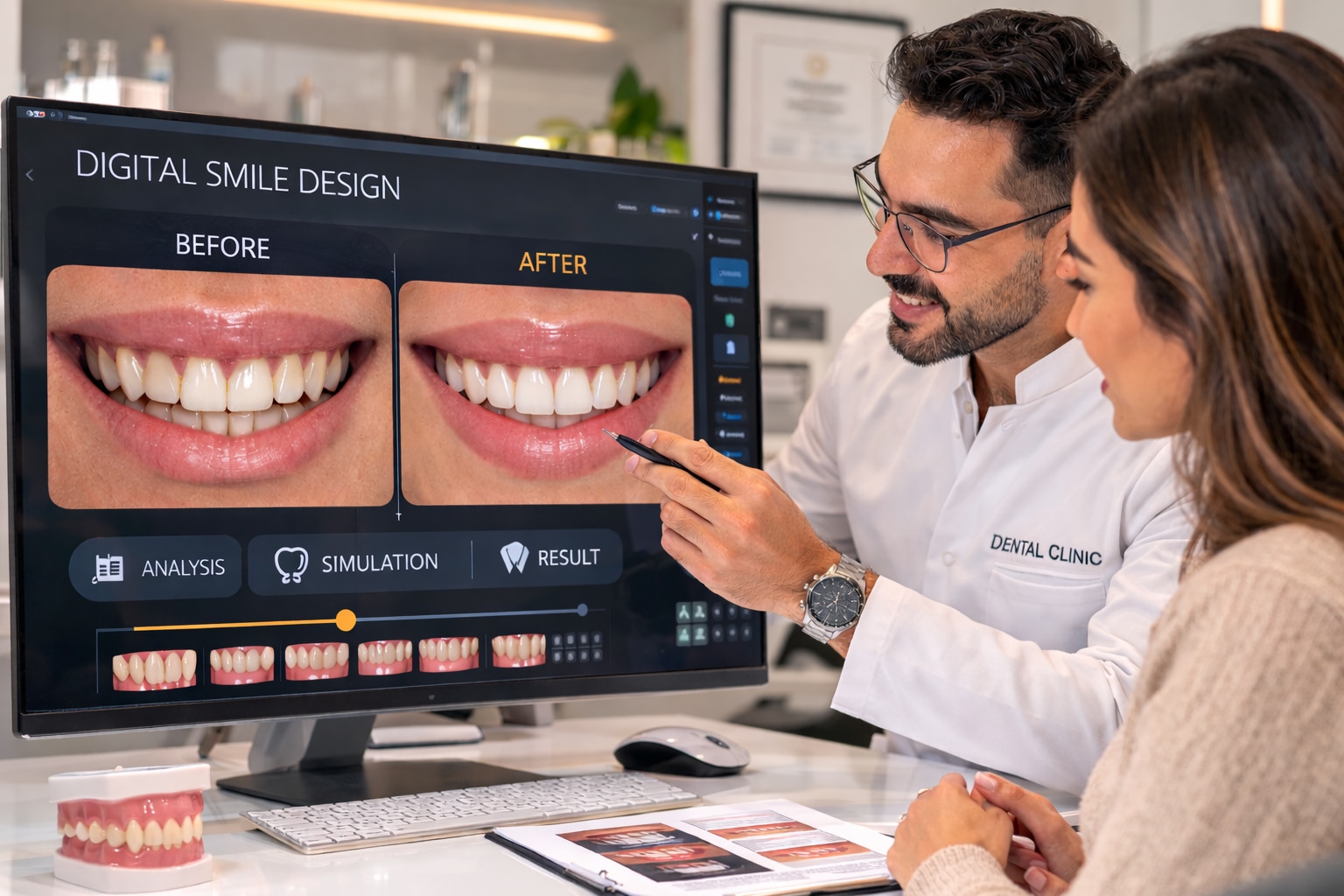
- Test the arrangement with a digital smile preview, diagnostic wax-up or trial smile. Check tooth length, lip closure, “s” and “f” sounds, chewing comfort, anterior guidance and hygiene access before approving treatment.
A diagnostic wax-up or trial smile can expose excessive length, poor lip support, an unnatural incisal edge or speech changes that a screen hides. It tests the proposed design; it does not reproduce the exact shade, translucency, three-dimensional contour or final material.
A digital smile preview is an illustration, not a guarantee. It cannot reliably predict soft-tissue healing, exact phonetics or how you will respond emotionally to the finished result. Finalize the design only after active decay, gum inflammation and infection are controlled.
How Does a Proposed Smile Become a Treatment Sequence?
A proposed smile becomes a treatment sequence by addressing health and tooth position before appearance. The plan is not simply “bond, veneer, or crown”; enamel availability, existing restorations, required color change, bite, material thickness, and cleansable margins determine the route.
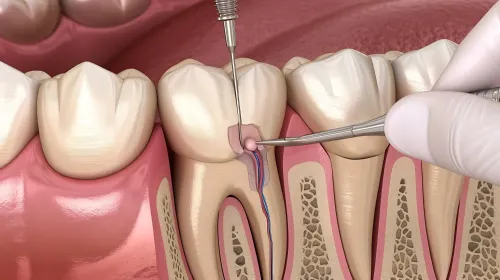
1. Stabilize disease first. Treat decay, cracks, active gum disease and infection before cosmetic work. A tooth needing root canal treatment may require a post, core or crown rather than a veneer.
2. Correct position when necessary. Orthodontics can create space, improve angulation and midline position, and reduce the enamel removal needed to disguise crowded teeth with restorations. Aligned teeth also produce contours that are easier to clean.
3. Establish the gum frame. Uneven margins, excessive gum display or recession can call for gum contouring, crown lengthening, soft-tissue grafting or orthodontic movement. Adding tooth-colored material before this step can leave the teeth looking uneven after healing.
4. Test and restore the design. A mock-up or provisional restoration checks tooth length, speech, bite and lip support. Minor shape changes may suit composite bonding; porcelain veneers suit selected enamel-supported changes, while heavily damaged or weakened teeth may need crowns.
5. Replace missing teeth with coordinated planning. An implant requires space, bone, root clearance, soft-tissue volume and a planned emergence profile, not just a visible crown. A provisional implant crown may condition the gum before the final restoration.
The sequence prevents one procedure from compromising the next. Definitive restorations come after healing, movement and functional checks are complete.
What Should You Confirm Before Approving the Final Plan?
Before approving the smile design treatment plan, confirm that active caries, gum inflammation, infection, inadequate root-canal treatment and unstable restorations have been treated. A cosmetic result placed on unhealthy teeth or inflamed gums is less predictable and harder to maintain.
Ask how the plan protects tooth preservation, rather than accepting unnecessary drilling for a faster cosmetic change.
| Option | Main trade-off | Confirm before choosing |
|---|---|---|
| Enamel reshaping or composite bonding | Most tooth preservation, but limited durability and stain resistance | Whether the change is large enough for bonding and how repairs will be handled |
| Veneers | Stronger colour and shape control, but usually requires enamel preparation | The exact preparation depth, edge position and replacement plan |
| Crowns or rehabilitation | Restores a weakened tooth, but removes more structure | Why a veneer or bonding cannot safely restore it |
A trial smile or diagnostic wax-up should be tested for speech, lip closure, chewing, tooth length, hygiene access and comfort—not judged from a screen alone. Check occlusal contacts, anterior guidance, clenching or grinding, and whether the proposed bite and function remain stable.
During your cosmetic dentistry consultation, ask:
- Which teeth are being changed, and what happens if you decline one part?
- How long will each material last in your bite, and what maintenance, polishing, night guard or replacement will it require?
- What will the plan cost in appointments, temporary restorations and future repairs?
- Which result is provisional, and what cannot be predicted from the preview?
Sri Krishna Multispecialty Dental & Implant Studio can use this discussion to coordinate cosmetic, orthodontic and restorative decisions instead of treating appearance in isolation.
Related service
Cosmetic Dentistry Cosmetic Dentistry-Smile Designing Cosmetic Dentistry Creating Natural, Confident Smiles Through Art, Science & Digital Precision A confident smile can transform not just your... View service → |
Frequently asked questions
What does a balanced smile involve?
It considers the facial midline, dental midline, incisal edge position, smile arc, lip movement, gingival display and tooth display at rest and during smiling.
Which records are needed for smile design?
Photographs show facial and dental relationships, videos capture lip movement and speech, digital scans show tooth surfaces and bite, and radiographs reveal supporting structures when needed.
How is smile design personalised and tested?
The clinician adapts tooth proportions, edge positions, colour, gum display and alignment to your face, then tests the proposal digitally or with a temporary mock-up.
How does a proposed smile become a treatment sequence?
The plan is ordered according to health and function first, followed by gum treatment, orthodontic movement, tooth reshaping or restoration, and final review.
What should you confirm before approving the final plan?
Confirm the target changes, treatment stages, alternatives, tooth preparation, bite effects, maintenance, limitations, timeline and how the result will be reviewed.