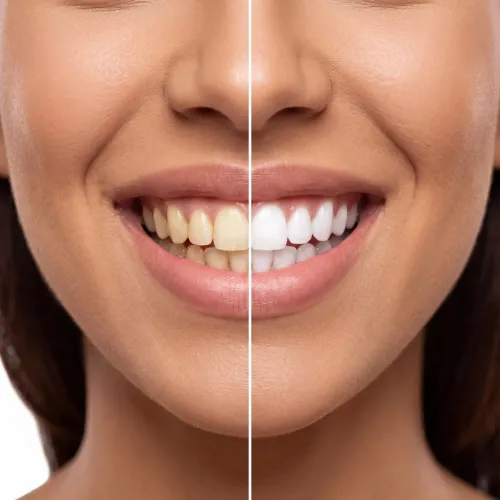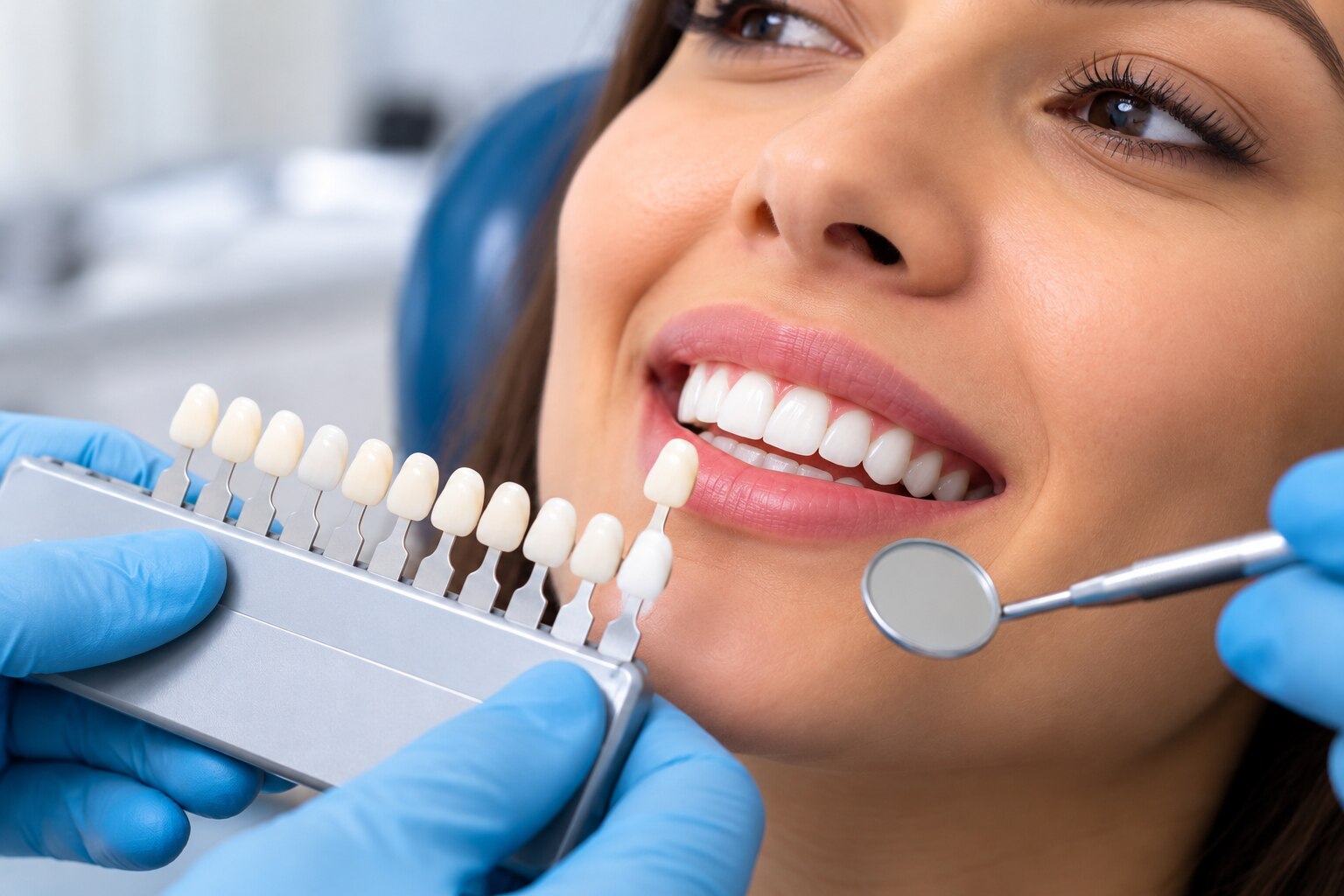
A chipped, darkened, short, or slightly uneven tooth does not automatically need a veneer. By comparing the problem with bonding, whitening, enamel reshaping, orthodontics, and crowns, then checking the tooth’s health and bite, you can identify when a veneer is a sensible option and when preserving natural enamel matters more.
Key takeaways
- Use veneers for suitable cosmetic changes, not untreated decay or active gum disease.
- Compare composite bonding, whitening, enamel reshaping, or orthodontics first.
- A dentist checks enamel, bite, cracks, decay, and gum health before treatment.
- Expect preparation, shade selection, temporary changes, and permanent enamel removal.
What a veneer can change—and which problems it suits
A dental veneer is a thin covering bonded to the visible front surface of a tooth. Porcelain veneers are custom-made ceramic shells that resist staining and create a stable shape; composite veneers use tooth-coloured resin applied and shaped directly on the tooth.
Both can alter colour, contour, length, and apparent alignment without replacing the entire tooth.
Veneers are worth discussing when the visible problem is limited and the tooth remains structurally sound:
- Small chips or worn edges, making them a possible chipped teeth treatment
- Discolouration that persists after suitable whitening
- Uneven tooth shapes, narrow teeth, or teeth that look too short
- Small gaps between front teeth
- Minor rotations or protrusion visible in the smile
| Option | What it changes | When it fits better |
|---|---|---|
| Whitening | Tooth colour | The tooth is healthy and the shade responds to bleaching |
| Composite bonding | Small chips, gaps, or shape defects | You want a quicker repair with less tooth removal |
| Braces or clear aligners | Tooth position and spacing | Crowding, rotation, or protrusion is the main problem |
| Enamel reshaping | Minor sharp edges or excess enamel | A very small contour change is enough |
| Crown | The tooth’s full visible structure and strength | Extensive damage leaves too little sound tooth for a veneer |
A veneer camouflages position by changing the front shape; it does not straighten the root or correct a major bite. Treat decay, leaking fillings, and gum disease first, because covering an unhealthy tooth does not remove the disease and can complicate future cleaning.
Which alternative may solve the problem more conservatively
The most conservative choice is the one that corrects the actual problem while removing the least healthy tooth structure. A small chip, for example, does not automatically justify a veneer.
| Option | What it changes | When it applies |
|---|---|---|
| Whitening | Lightens natural tooth colour, not shape | Use for general staining or yellowing; plan teeth whitening before veneers because ceramic will not lighten later |
| Composite bonding | Adds tooth-coloured material to a chip, gap, or minor shape defect | Choose for small repairs when easy modification and repair matter more than maximum stain and wear resistance |
| Enamel reshaping | Removes tiny amounts of enamel to smooth a point or balance uneven edges | Use only for minor irregularities; reshaping cannot rebuild lost structure |
| Braces or clear aligners | Moves crowded, rotated, protruding, or spaced teeth | Choose when tooth position is the cause; veneers camouflage alignment and can require removal of sound enamel |
| Veneer | Covers the visible front surface to alter colour, shape, length, or a small gap | Discuss when whitening, bonding, or reshaping cannot achieve the desired change and the tooth remains suitable |
| Crown | Covers most or all of a tooth for protection and strength | Consider when extensive decay, a large filling, a crack, or major structural loss leaves too little tooth for a veneer |
The veneer vs bonding decision often comes down to repair size, staining risk, bite pressure, and how much enamel can remain untouched. Treat cavities and gum disease first; neither veneer nor crown removes active disease.
How a dentist decides whether the tooth can support a veneer
Veneer suitability starts with whether the tooth is a healthy, stable foundation, not whether its front surface looks attractive. A dentist examines the tooth and surrounding tissues before deciding whether bonding a veneer would protect the result or conceal a problem.
The clinical checks include:
- Decay: Look for cavities, leaking fillings, and weakened areas; treat them before covering the tooth.
- Cracks: Check for visible fractures and symptoms when biting. A deep crack can make a veneer unreliable.
- Pulp status: Test vitality when discoloration, pain, trauma, or deep restoration raises concern about the nerve.
- Gums: Assess bleeding, swelling, pocket depth, and recession. Gum disease and veneers are a poor combination because inflamed tissue makes cleaning and margins harder to manage.
- Enamel: Confirm that enough sound enamel remains for predictable bonding. Enamel preparation that removes too much support can expose weaker dentine.
- Bite pressure: Check whether the opposing teeth strike the proposed veneer directly or with excessive force.
- Grinding: Ask about clenching, night-time grinding, jaw soreness, and worn teeth. Uncontrolled grinding increases chipping and debonding risk.
- Position and bite: Evaluate crowding, rotations, overbite, and major bite problems. Moving teeth with orthodontic treatment may be safer than forcing a veneer to correct their position.
The rule for decay before veneers is simple: treat active disease first. A dentist may recommend a crown or another restoration when the tooth lacks sufficient structure, while a stable tooth with limited damage can proceed after the gums and bite are controlled.
What happens before the veneer is bonded
Before bonding, the dentist turns your preferred smile into a testable plan, checking whether the proposed veneers work biologically, visually, and functionally.
1. During the veneer consultation, the dentist examines your teeth, gums, bite, available enamel, tooth vitality where relevant, grinding habits, and expectations for colour and shape.
2. Standardised photographs record your smile at rest, while speaking, and during a full smile. They provide a reference for symmetry, tooth display, and facial proportions.
3. Digital dental scans or physical impressions capture tooth positions and the way your upper and lower teeth meet. These records guide the veneer treatment process and laboratory design.
4. Veneer shade selection happens before final fabrication. If whitening is appropriate, complete it first; ceramic will not become lighter later.
5. The dentist prepares only the planned surfaces, then places temporary restorations when required. These protect prepared teeth and let you experience the proposed length, contour, and colour.
6. A mock-up or try-in lets you speak, smile, and close your teeth before final bonding. At Sri Krishna Multispecialty Dental & Implant Studio, this consultation stage can expose excess bulk, altered speech, an uncomfortable bite, or teeth that look too long while changes remain possible.
7. After you approve the design and the dentist confirms fit, the veneer is bonded with dental adhesive, adjusted against the opposing teeth, and polished. The final check focuses on comfort, contacts, speech, and bite—not appearance alone.
Related service
Cosmetic Dentistry Cosmetic Dentistry-Smile Designing Cosmetic Dentistry Creating Natural, Confident Smiles Through Art, Science & Digital Precision A confident smile can transform not just your... View service → |
What you trade for the final appearance
Expect a lasting change, not a reversible cosmetic coating. Conventional preparation removes some enamel, so veneers are irreversible: the tooth will usually need a veneer or another restoration later. No-prep veneers do not remove that decision; existing tooth shape or shade can still require reduction.
Adding material without enough space can create bulky edges, gum irritation, or an unnatural profile.
Whiten before the final veneer shade is selected if bleaching is appropriate. Ceramic will not lighten later, and whitening neighbouring teeth afterward can make a colour mismatch more visible.
| Option | Main advantage | Main trade-off |
|---|---|---|
| Ceramic veneer | Better colour stability and surface wear resistance | Laboratory fabrication; a fracture is harder to repair invisibly |
| Composite veneer | Easier to modify or repair, often completed directly | Staining, wear, polishing, or repair may occur sooner |
Veneer maintenance includes careful brushing, cleaning between teeth, dental reviews, and avoiding habits that overload the edges. A night guard offers grinding protection, but it cannot make veneers indestructible; untreated grinding raises the risk of chipping or debonding. Common veneer complications include edge fracture, loose bonding, and gum irritation.
Ceramic veneers are not lifetime restorations: some studies report around 90% or higher survival at 10 years for selected groups, while composite veneers often need attention sooner. Your result depends on the material, bite, bonding, preparation, and habits.
Frequently asked questions
What dental problems can veneers change?
Veneers can improve the visible shape, colour, minor chips, and uneven edges of suitable front teeth.
Which alternatives are more conservative than veneers?
Depending on the problem, composite bonding, professional whitening, enamel reshaping, or orthodontic treatment may preserve more tooth structure.
How does a dentist decide whether a tooth can support a veneer?
The dentist checks enamel availability, decay, cracks, gum health, bite forces, and habits such as clenching or grinding.
What happens before a veneer is bonded?
The process includes examination, treatment planning, shade selection, tooth preparation when needed, a trial or temporary stage, and final bonding.
What do you trade for a veneer’s appearance?
You trade some natural tooth structure for a planned shape and colour, along with maintenance needs and possible repair or replacement later.