Scaling and polishing are not two names for the same procedure. Scaling removes hardened calculus, while polishing deals mainly with surface stain and residue, so their order helps the clinician finish and inspect the accessible tooth surfaces without treating polishing as a substitute for deposit removal.
Key takeaways
- Scaling removes hardened calculus; polishing targets surface stains and residue.
- Polishing after scaling smooths accessible tooth surfaces and reveals remaining deposits.
- Ask for selective polishing around exposed roots, fillings, crowns, and implants.
- Skip routine polishing when no stain or residue remains after scaling.
Scaling and polishing remove different kinds of buildup
Dental scaling removes calculus, the hardened mineralized deposit that brushing cannot reliably remove; dental polishing handles the residue and discoloration left on accessible surfaces. The two procedures use different tools and solve different problems.
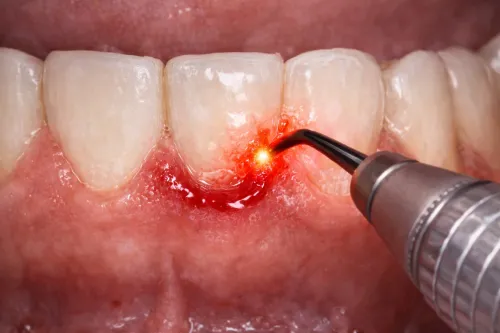
1. Scaling is the tartar removal step. A clinician uses hand instruments or an ultrasonic scaler whose vibration and water break up and flush away calculus. It treats deposits above the gumline and, when indicated, deposits below or close to it. If subgingival calculus requires deeper treatment, scaling and root planing may be needed.
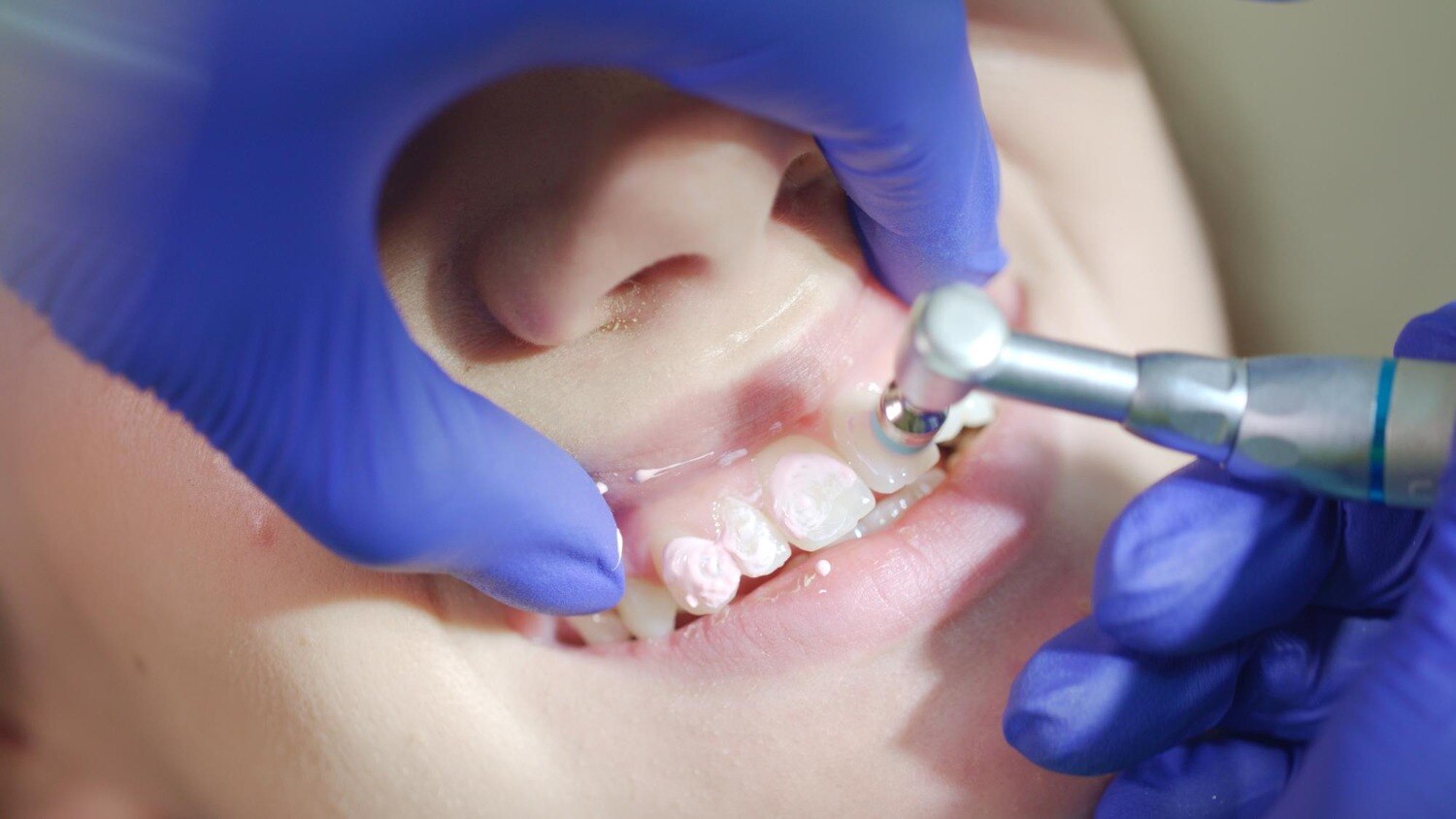
2. Polishing uses a rubber cup with prophy paste or an air-polishing device. It removes external coffee, tea, tobacco or food stain, plaque residue and the acquired pellicle from accessible surfaces. Polishing cannot remove established tartar, so it cannot replace scaling.
The practical difference is straightforward: scaling removes the rough, firmly attached obstruction, while polishing leaves the cleaned surfaces smoother and removes discoloration that instrumentation alone may leave behind. A tooth can feel smoother after polishing without being free of calculus in areas the instrument did not reach.
Polishing is a finishing step, not a stronger form of scaling. It is also not sterilization, disinfection or treatment for gingivitis or periodontal disease. It does not eliminate bacteria from periodontal pockets or address the cause of periodontitis; those problems require assessment, targeted periodontal treatment and ongoing plaque control.
Why the clinician usually polishes after scaling
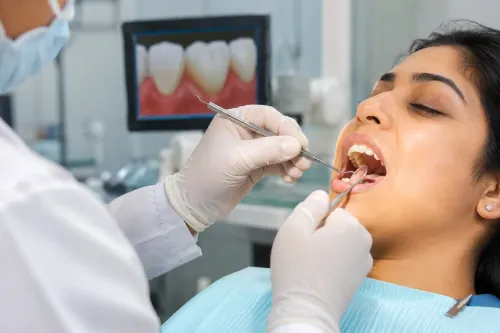
A professional dental cleaning begins with an examination, followed by periodontal measurements when indicated: pocket-depth readings, bleeding assessment and inspection of the gumline. This establishes where deposits, inflammation or sensitivity need attention before instruments are used.
- The clinician scales above and below the gumline as required, using hand instruments or an ultrasonic scaler.
- The clinician rinses away loosened calculus, plaque and debris.
- The clinician performs scaling then polishing on selected accessible surfaces.
- The clinician flosses between the teeth and checks areas that were difficult to reach.
- The clinician gives post-treatment advice, including guidance for sensitivity, brushing and interdental cleaning.
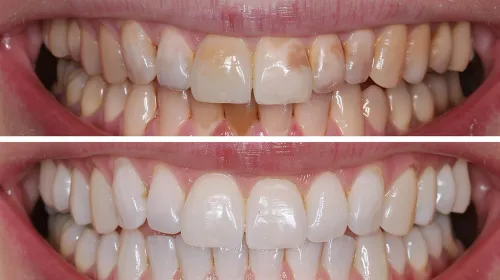
Polishing after scaling is common because scaling can uncover coffee, tea, tobacco or food stains hidden beneath calculus. Once heavy deposits are gone, polishing removes remaining plaque residue and surface stain from areas the instrument could not clean smoothly.
The sequence also supports inspection. A polished surface can make rough spots or deposits easier to identify around the gumline, brackets, crowns, bridges and tight contacts. The clinician may return to a missed area after polishing reveals a deposit; a smooth-feeling tooth is not proof that every calculus deposit is gone.
This is a practical finishing and inspection process. Polishing does not make the scaler remove calculus more effectively, and it cannot replace additional scaling where deposits remain. It simply helps complete and assess the accessible surfaces.
What polishing can remove, and which method is used
Polishing provides extrinsic stain removal from coffee, tea, tobacco, colored foods and some antiseptic rinses, including chlorhexidine. A rubber cup with prophy paste gives the clinician close control around individual teeth, tight areas and restorations.
It cannot change enamel’s natural shade, remove intrinsic tooth discoloration inside enamel or dentin, reliably correct tetracycline staining, or replace peroxide bleaching for intrinsic color changes.
| Method | Best use | Important limitation |
|---|---|---|
| Conventional rubber-cup polishing | Localized stain and residue; close control around individual teeth and restorations | Abrasive paste can wear exposed dentin, cementum or unsuitable restorative materials when used forcefully or repeatedly |
| Air polishing | Widespread surface stain and biofilm | Powder, pressure, distance and direction must be controlled around tissues and restorations |
| Sodium bicarbonate powder | Stronger surface-stain removal | Comparatively abrasive and salty; not the default for every patient or implant situation |
| Glycine or erythritol powder | Less abrasive periodontal-maintenance and many implant-maintenance protocols | Still requires correct technique and confirmation that the powder suits the implant and restoration |
Air polishing combines powder, water and air in a spray, so it is not interchangeable with conventional polishing. Misguided spray can irritate soft tissue, worsen respiratory sensitivity or affect certain restorations and implant surfaces. The clinician chooses the method, powder and settings after considering exposed roots, sensitivity, fillings, crowns, veneers, bridges, brackets and implants.
The goal is a clean, smooth surface—not removal of every visible mark at any cost.
Why polishing is selective around roots, restorations and implants
Polishing safety depends on the surface being treated, not on a blanket claim that polishing is harmless or damaging. Prophy paste contains abrasives, and repeated or forceful use can wear exposed dentin, cementum and root surfaces, increasing roughness or sensitivity.
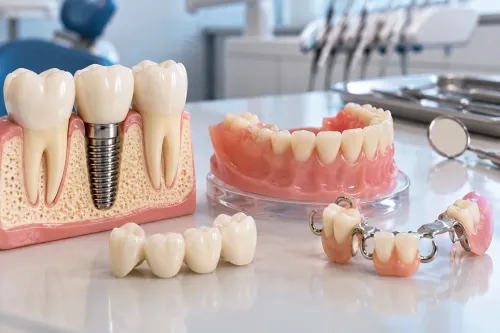
Composite fillings, glass ionomer, acrylic and other restorative materials can lose gloss or become rough when treated with an unsuitable abrasive system. A rough restoration holds more plaque and stain. Porcelain veneers and dental crowns and bridges also require a compatible paste and instrument; the wrong combination can dull or scratch the surface.
Implant maintenance requires separate attention to the implant surface, the crown or other restoration attached to it, and the surrounding soft tissue. Low-abrasive glycine or erythritol powders are commonly selected for some implant protocols, but the clinician must follow the implant and restoration manufacturer’s instructions. Powder directed incorrectly can irritate soft tissue.
Ask the dental team whether polishing should be adjusted when you have:
- Exposed-root sensitivity, erosion or abrasion
- A recently placed filling, veneer, crown, bridge or other restoration
- Inflamed or easily irritated soft tissue
- Difficulty tolerating air, water or airborne powder
- An implant with manufacturer-specific maintenance instructions
The clinician may polish only stained surfaces, use a less abrasive product, shorten the polishing time or skip polishing. The goal is a clean, smooth, healthy surface—not maximum stain removal at any cost.
How to decide whether polishing belongs in your cleaning visit
Polishing belongs in your visit when it solves a specific problem, not simply because scaling has finished. Ask what the examination found, whether visible stain or residue is present, and which surfaces will be polished. Selective polishing limits unnecessary abrasive exposure while addressing stained or plaque-retentive areas.
Ask these professional cleaning decisions questions:
- Does my sensitivity, erosion, exposed-root surface, respiratory sensitivity, or recently placed restoration change the plan?
- Which paste or powder matches my fillings, veneers, crowns, bridges, brackets, implants, and exposed roots?
- Will you polish all teeth, or only surfaces with visible stain or residue?
- Could the chosen method roughen a composite, glass ionomer, acrylic, veneer, crown, bridge, or implant-related surface?
| Factor | What to discuss | Possible plan |
|---|---|---|
| Visible stain or residue | Where it appears and whether it affects appearance or plaque retention | Polish only those accessible surfaces |
| No visible stain | Whether polishing adds a clear benefit | Skip or limit polishing |
| Exposed roots, erosion, or sensitivity | Risk of abrasion and post-cleaning sensitivity | Use a less abrasive method or omit polishing |
| Implants and restorations | Powder, pressure, instrument, and manufacturer instructions | Choose compatible materials and technique |
| Respiratory sensitivity or spray intolerance | Whether airborne powder is safe and tolerable | Use paste, modify the spray, or avoid it |
Scaling and polishing do not replace daily plaque control: brush twice daily with fluoride toothpaste and clean between teeth. Plaque begins reforming after the appointment, and polishing does not disinfect periodontal pockets or replace indicated periodontal maintenance. Report persistent pain instead of assuming it is normal.
Sri Krishna Multispecialty Dental & Implant Studio can incorporate these choices into a personalized plan based on your findings and existing dental work.
Related service
Bleeding Gums Gum Treatments (Periodontics) Healthy Gums, Healthy Smile – Advanced Care for Bleeding Gums, Gum Recession, and Bone Loss Gums are the foundation of... View service → |
Frequently asked questions
Why is polishing usually performed after dental scaling?
Scaling removes hardened calculus first. Polishing then clears accessible residue and surface discoloration that scaling can leave behind.
What can dental polishing remove?
Polishing can remove external stains, plaque residue, and particles from accessible tooth surfaces. It does not remove hardened calculus.
Why is polishing selective around roots, restorations, and implants?
Exposed roots can be sensitive, while restorations and implant surfaces can scratch or suffer surface damage from unsuitable polishing instruments or powders.
Does every dental cleaning visit need polishing?
No. Polishing belongs in the visit when surface stain or residue remains after scaling; a clinician can limit or omit it when the surfaces are already clean.