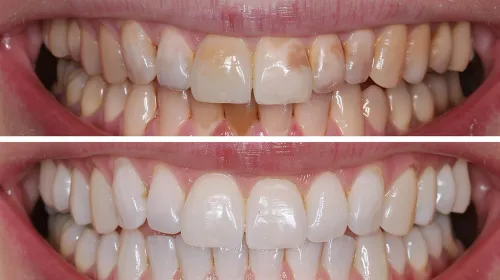
An uneven gum line can result from excess gum tissue, recession, tooth position, tooth shape, bone levels or upper-lip movement, so trimming tissue is not automatically the right answer. By the end, you will know how dentists identify the cause, compare laser reshaping with other procedures, and judge whether changing the gum margin can improve your smile without exposing a larger problem.
Key takeaways
- Uneven gums can result from excess tissue, recession, or different tooth eruption.
- Laser reshaping changes gum contours; it does not correct every cause of asymmetry.
- Gingivectomy, gingivoplasty, and crown lengthening remove or reshape tissue differently.
- Get a periodontal examination before cosmetic reshaping if gums bleed, recede, or feel tender.
What makes a gum line look uneven?
An uneven gum line can reflect too much gum, too little gum, or different gum heights around neighbouring teeth. These causes look similar in photographs but require different assessments and treatments.
| Cause | What you see | What it may indicate |
|---|---|---|
| Excess gum coverage | Teeth look short because gingiva covers more of the crowns | Altered passive eruption or a gummy smile; soft-tissue reshaping may help |
| Gum recession | Roots appear longer and the gum margin sits lower | Tissue loss, traumatic brushing, thin gums, or periodontal damage |
| Unequal gum heights | One margin sits higher or lower than the next | Natural asymmetry, tooth position, angulation, or different bone levels |
Tooth shape can create a false gum problem: worn, fractured, decayed, or naturally short crowns may look too small even when the gum is correctly positioned. Tooth position, rotation, and uneven eruption also change the apparent gum heights. A tooth tilted toward the lip can make its margin seem misplaced.
Lip movement matters too. A hypermobile upper lip or excessive vertical jaw growth can expose more gum during a full smile, although the gum contour itself is normal. Bone level also determines where the gum can safely sit.
Bleeding, swelling, deep pockets, loose teeth, or bone loss point toward periodontal disease, not a cosmetic contouring issue. Treating disease by making the margins look even can hide damage and worsen the result. Laser gum correction fits excess gum coverage best; it does not move teeth, reshape bone, or correct lip or jaw causes.
How laser gum correction changes the visible tooth-to-gum balance
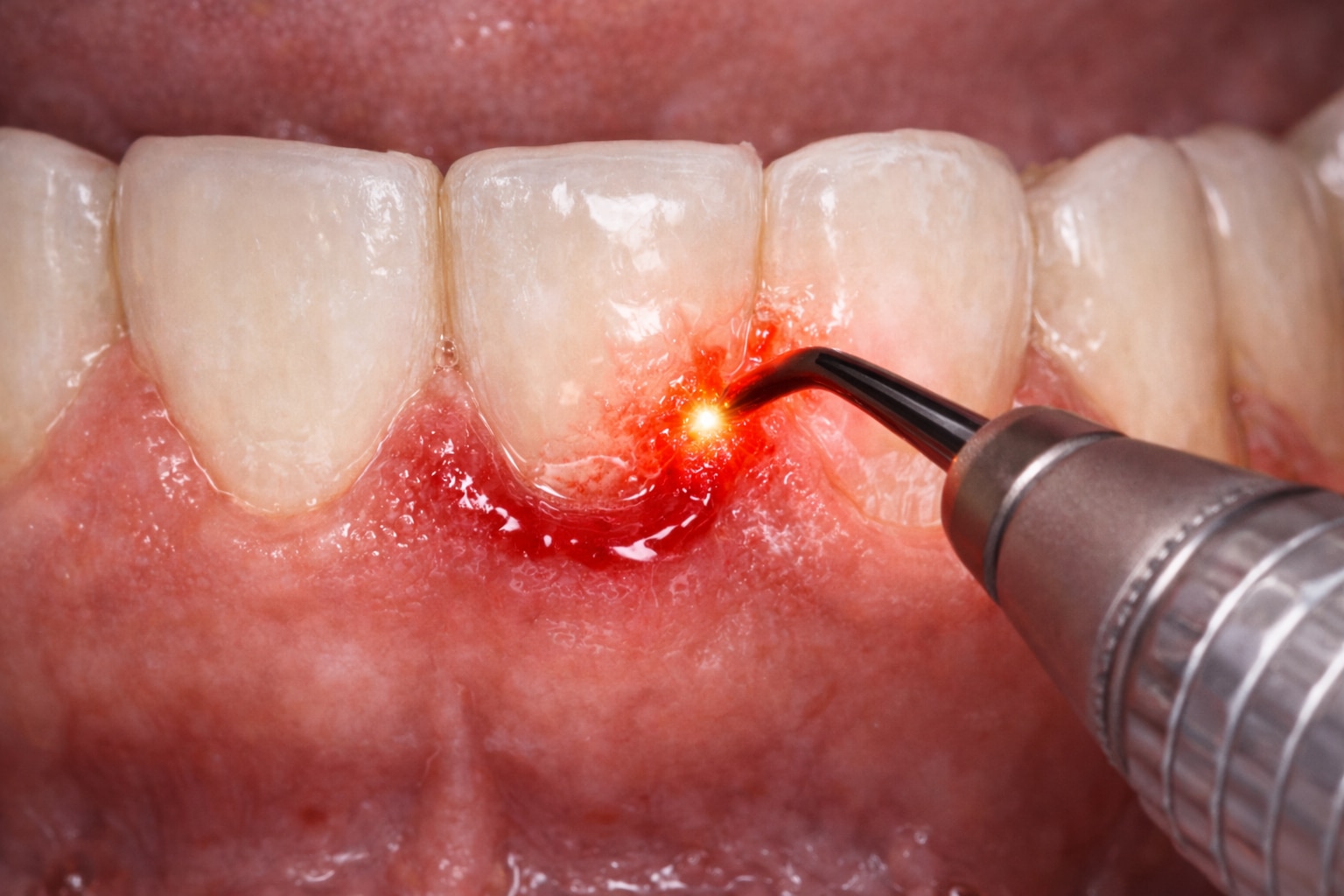
The visible balance changes when excess gingiva is reduced to reveal more of the natural tooth crown. Laser gum correction does not move teeth or change their colour; it changes the amount of tooth and gum that your smile displays.
A dentist plans the new contour before removing tissue, using photographs, a full-smile view and measurements of each tooth. The planned line accounts for the midline, facial symmetry, tooth angulation, tooth proportions and the amount of gum shown when you smile.
- The dentist marks the intended gum margin, comparing the height and curve across neighbouring teeth rather than treating one tooth in isolation.
- Laser-assisted gum reshaping removes or sculpts excess gingiva in small increments. The clinician preserves the papillae, the triangular gum between teeth, to reduce the risk of uneven spaces.
- The laser seals small blood vessels as it cuts, creating a clearer field for judging the contour. That does not replace careful control of tissue depth and heat.
- The dentist checks the gingival zeniths, the highest points of the gum margins, against the tooth shapes and central midline.
- The visible proportions are reassessed during treatment. If exposing more crown makes one tooth look unusually long or highlights a neighbouring difference, the contour can be refined before finishing.
The goal is a coordinated tooth-to-gum relationship, not simply a lower gumline. If the supporting bone lies too close to the planned margin, soft-tissue reshaping alone cannot create a stable result.
Gingivectomy, gingivoplasty and crown lengthening are not the same
The deciding question is whether enough healthy gum can be removed without leaving the new margin too close to the alveolar bone. If the planned margin would crowd the supracrestal tissue attachment—the junctional epithelium and connective-tissue attachment above bone—soft-tissue trimming alone is unsafe.
| Option | What it means | When it applies |
|---|---|---|
| Gingivectomy | Removes excess gum tissue to expose more of the natural crown. | Use when enlarged or excessive gingiva covers the crown and the bone-to-margin relationship provides adequate attachment space. |
| Gingivoplasty | Recontours gum thickness, scallops or edges rather than simply removing tissue. | Use when the gum line needs smoother proportions around individual teeth. |
| Laser-assisted gum reshaping | Uses a soft-tissue laser to perform a gingivectomy, gingivoplasty or both. | Use for tissue-only contouring when diagnosis and bone levels support it; the laser cannot recontour bone or move teeth. |
| Crown lengthening | Uses gum removal and, when required, flap surgery with selective bone recontouring. | Use when bone lies too close to the intended margin and space must be created for stable supracrestal tissue attachment. |
A laser can cut and coagulate simultaneously, improving visibility during contouring. It does not automatically produce a better long-term gum line than a scalpel; diagnosis, heat control, power, movement and technique determine the result.
If wear, fracture, decay or an old restoration makes the tooth look short, exposing more crown can worsen proportions or reveal damage. Restorative, periodontal or orthodontic planning may need to come before reshaping.
Who should have a periodontal examination before cosmetic reshaping?
A periodontal examination comes before cosmetic reshaping because a laser can even the gum outline but cannot cure the disease causing it. The best candidates have stable gums, no active bleeding or swelling, adequate tooth structure, and excess gingiva as the main reason the crowns look short.
- Record gum-pocket measurements around every tooth. Deep pockets, bleeding on probing, pus, or tooth mobility point to periodontal treatment before contouring.
- Check for recession and thin gums. Removing tissue from an already delicate margin can expose roots, increase sensitivity, or make the uneven line more visible.
- Evaluate bone support with clinical findings and radiographs when indicated. Bone loss changes the safe position of the gum margin and can make elective reshaping unsuitable.
- Compare tooth proportions, decay, fractures, worn edges, old restorations, tooth angulation, and the amount of gum shown during a full smile. Treating one tooth alone can magnify an asymmetry.
Active gingivitis or periodontitis must be controlled first. Decay, inadequate tooth structure, and worn or fractured crowns may require restorative treatment; tooth or jaw position may require orthodontic or surgical planning instead. Thin gums also demand caution.
The clinician should identify the gummy smile causes before choosing contouring. Lip hypermobility and excessive vertical maxillary growth will not improve when gum tissue alone is removed. Sri Krishna Multispecialty Dental & Implant Studio can coordinate periodontal, restorative, and smile-planning assessments when the visible problem has more than one cause.
Related services
Cosmetic Dentistry Cosmetic Dentistry-Smile Designing Cosmetic Dentistry Creating Natural, Confident Smiles Through Art, Science & Digital Precision A confident smile can transform not just your... View service → |
Bleeding Gums Gum Treatments (Periodontics) Healthy Gums, Healthy Smile – Advanced Care for Bleeding Gums, Gum Recession, and Bone Loss Gums are the foundation of... View service → |
What result, risks and laser details should you weigh?
Exposing more crown does not guarantee better proportions. A tooth can look too short because of its shape, angle or position, while a protruding jaw or high lip movement can make the smile look gummy even after tissue is removed.
Laser treatment does not move teeth, change tooth colour or correct either jaw or lip causes.
Laser choice affects what the procedure can do and how heat is managed.
| Laser | Main use | Key point |
|---|---|---|
| Diode laser | Soft-tissue cutting and bleeding control | Use correct energy settings, continuous motion and irrigation where indicated; a stationary beam can overheat tissue. |
| Erbium laser | Soft tissue and, in suitable settings, hard tissue | It interacts strongly with water, so ask whether bone treatment is planned and which wavelength will be used. |
Removing gum is irreversible. Possible problems include soreness, sensitivity, postoperative bleeding, recession and root exposure. Loss of papilla tissue can create black triangles, while treating one tooth alone can make differences in zeniths, tooth length or midline more obvious.
Ask how the clinician will control heat and how much tissue will be removed. Gum line rebound can return the margin toward its original position, especially when tissue lies too close to bone.
Allow healing and stabilization before judging the final appearance or placing definitive veneers or crowns; the gum line may need several weeks or longer to mature. Expect sensitivity while exposed surfaces settle, and delay the final cosmetic evaluation until the margin is stable.
Frequently asked questions
What makes a gum line look uneven?
An uneven gum line can result from excess gum tissue, gum recession, or different gum heights around neighbouring teeth.
How does laser gum correction change smile appearance?
It removes or reshapes selected gum tissue to alter the visible tooth-to-gum balance and create a more even contour.
Are gingivectomy, gingivoplasty, and crown lengthening the same?
No. Gingivectomy removes excess gum tissue, gingivoplasty reshapes gum contours, and crown lengthening exposes more tooth structure by treating gum tissue and, when required, supporting bone.
Who needs a periodontal examination before cosmetic gum reshaping?
People with bleeding, swelling, gum recession, tenderness, loose teeth, deep gum pockets, or suspected periodontal disease need an examination before cosmetic treatment.
What should you weigh before laser gum correction?
Discuss the intended gum contour, expected visible change, healing time, sensitivity, recurrence, tissue removal, bone treatment, and laser settings with your dentist.