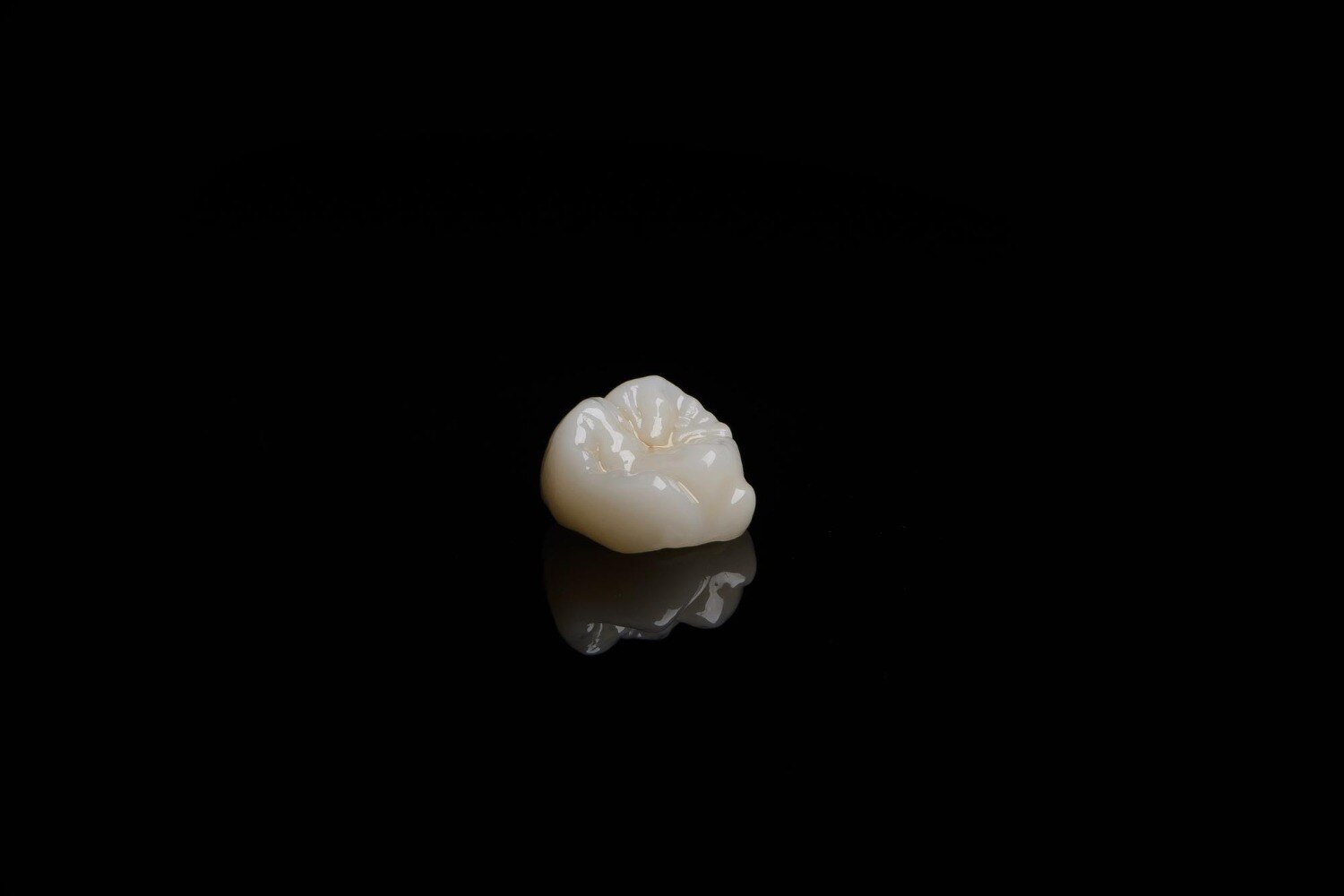
A zirconia crown or bridge is not selected simply because it is strong or tooth-coloured. The right choice depends on how much tooth remains, where the restoration sits, how hard you bite, how visible it is, and whether the design can achieve a stable, cleanable fit. By the end, you will know which clinical findings support zirconia, which alternatives deserve comparison, and what to check before cementation.
Key takeaways
- Choose zirconia when weakened teeth need durable cuspal coverage.
- Do not use a crown to mask untreated decay or inadequate ferrule.
- Ask whether monolithic, layered zirconia, or another material fits your tooth.
- Confirm preparation, bite checks, cleaning instructions, and follow-up plans.
Which teeth and clinical problems make zirconia a sensible choice?
Zirconia suits a heavily broken molar when enough sound tooth remains for a stable preparation and the restoration needs cuspal coverage. It also suits a root-canal-treated tooth when the remaining walls are weakened or cracked risk demands a full crown, but a crown cannot compensate for inadequate ferrule or untreated decay.
| Clinical situation | Why zirconia may fit | What can make another option wiser |
|---|---|---|
| Heavily broken molar | High strength and a monolithic design reduce veneering-porcelain chipping | An onlay or crownless adhesive restoration preserves more tooth when cusps and margins remain sound |
| Root-canal-treated tooth | Full coverage protects weakened remaining structure | A bonded partial crown may be less invasive if adequate walls and ferrule remain |
| Single front tooth | Translucent zirconia or a layered design can provide strength with improved appearance | Lithium disilicate or feldspathic porcelain may reproduce subtle translucency and texture more naturally |
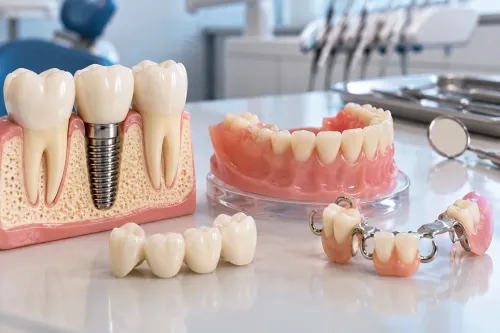
| Implant crown indication | Monolithic zirconia avoids a veneering layer that can chip | Implant position, screw-channel location, emergence profile, bite, and opposing teeth may favor another material |
| Multi-unit bridge | Zirconia can provide rigid connectors and span support | A long span, limited clearance, heavy bruxism, or high esthetic demand may change the design or material |
A natural tooth remains the least invasive choice: repair, an adhesive filling, or monitoring wins when enough healthy structure remains. Zirconia is not automatically the best fit or most natural result; preparation quality, shade, thickness, polishing, bite, and gum health determine whether its strength is useful rather than excessive.
When should zirconia be monolithic, layered, or a different material?
The material choice is a trade-off, not a ranking. 3Y-TZP prioritizes fracture resistance; 4Y zirconia and 5Y zirconia comparisons favor translucency at the cost of some strength. Design matters too: monolithic zirconia avoids a separate porcelain veneer, while layered zirconia adds lifelike surface detail but introduces veneer-chipping risk.
| Option | Strength and appearance | Chipping, repairability and typical use |
|---|---|---|
| 3Y-TZP, monolithic | Highest zirconia strength; more opaque | No veneer to chip; polish or replace if fractured; useful for posterior crowns and bridges |
| 4Y or 5Y zirconia, monolithic | More translucent and tooth-like; lower fracture resistance than 3Y | No veneer-chipping layer, but surface damage needs polishing or replacement; suitable for selected visible teeth |
| Layered zirconia | Strong zirconia core with porcelain for texture and characterization | Veneer can chip or be repaired in limited areas; chosen when front-tooth appearance outweighs that risk |
| Porcelain-fused-to-metal | Reliable strength; porcelain gives tooth color, but metal can limit translucency | Veneer can chip; repair is limited; useful when masking a dark foundation matters |
| Lithium disilicate | Translucent, natural-looking, with moderate strength | Repairability is limited; often suits single crowns and veneers when appearance leads |
| Feldspathic porcelain | Best fine optical effects, but least resistant to heavy loading | Fragile and difficult to repair; mainly conservative veneers |
| Composite | Lower strength and stain resistance, but easy to add or repair | Practical for temporary or minimally invasive work |
| Natural tooth | Optical variation and tactile response remain unmatched | It can crack or decay, but preserving it is usually more repairable than replacing it |
For a long-span bridge or thin implant crown, do not choose highly translucent zirconia by shade alone. Connector size, available thickness, substrate color, opposing teeth, and polishing determine whether strength, wear, and appearance remain balanced.
What does a genuinely good fit involve?
A good crown should seat completely without rocking, while its edge follows the prepared tooth and supports the gum without pressing into it. Clinicians assess zirconia marginal fit with a probe and visual inspection: an open margin can trap plaque, while an over-contoured margin can inflame the gum.
At try-in, they check three separate areas:
- The proximal contact points should let floss pass with firm resistance, not snap through or shred. A loose contact traps food; a tight one prevents complete seating.
- The occlusal contacts should meet the opposing teeth as planned, without making the crown hit first or directing force onto one cusp.
- The crown should remain stable when you bite, speak and move your jaw side to side.
Preparation design sets the limits. Adequate occlusal and axial clearance, rounded internal line angles and a clear finish line give the software and milling system a shape they can reproduce. “Strong” zirconia does not justify removing little or no tooth structure.
Digital impressions and CAD/CAM improve repeatability, but a poor scan still produces a poor crown. Missing gumline data, saliva, blood, stitching errors or an inaccurate bite record can distort the design.
The milled crown is also made oversized because presintered zirconia commonly shrinks about 20% to 25%; incorrect compensation or sintering distortion affects the margin and contacts.
The try-in catches these errors before cementation. If adjustment changes the bite, use controlled fine-grit instruments and polish the surface; leaving ground zirconia rough, or relying on glaze alone, can increase wear and introduce flaws.
What will happen from tooth preparation to follow-up?
The appointment sequence runs from tooth preparation to a seated, polished restoration and a later bite check. Timing depends on whether the tooth needs additional treatment.
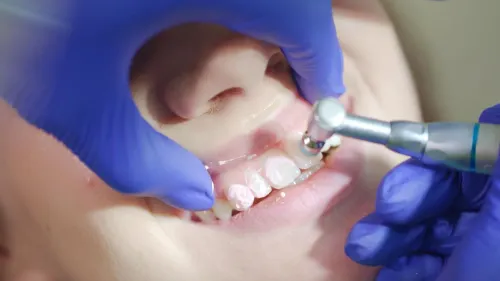
1. Examination and preparation: The dentist removes decay or defective filling material, checks the gumline and remaining tooth, and creates tooth preparation for zirconia with adequate axial and occlusal clearance, rounded internal angles, and a reproducible finish line.
2. Scanning or impression: An intraoral scan or conventional impression records the preparation, neighbouring teeth, opposing arch, and bite. A poor scan can create tight contacts, an open margin, or a high crown.
3. Temporary crown: A temporary crown protects the prepared tooth while the laboratory designs, mills, and sinters the zirconia. Report sensitivity, looseness, or a bite that feels high rather than waiting.
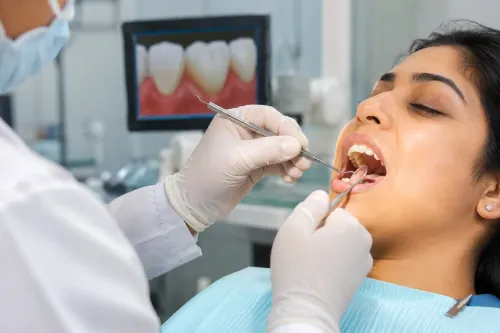
4. Try-in: The dentist checks seating, the gumline margin, contacts, shade, contour, and bite before cementation. Adjustments are easier before the crown is bonded.
5. Zirconia cementation: The inner surface may receive controlled airborne-particle abrasion and a 10-MDP primer or phosphate-containing resin cement when extra retention is needed. Hydrofluoric acid followed by silane is not the routine bonding method for zirconia; conventional cement can suit a retentive preparation.
6. Adjustment and polishing: Fine-grit adjustment limits surface damage. The dentist polishes any adjusted occlusal area; glazing alone does not replace polishing a rough ground surface.
7. Follow-up: Keep cleaning around the crown, attend the recommended bite review, and use a night guard if prescribed for grinding. Return promptly for pain, movement, chipping, or persistent food trapping.
What should you ask before accepting a zirconia recommendation?
Ask for a reasoned recommendation, not simply “zirconia is stronger.” Use these questions during your zirconia treatment consultation:
1. Is enough healthy tooth structure left, and are there cracks, decay, leaking fillings, or a weak root? Ask whether a root-canal-treated tooth has adequate ferrule and needs a post, core build-up, or a different design.
2. Are my gums and supporting bone healthy? Active periodontal inflammation can compromise margins and make any crown or bridge a poor choice.
3. How does bruxism and zirconia affect this plan? Discuss a night guard, bite forces, polished occlusal surfaces, and the risk of wear, loosening, or fracture.
4. What clearance is available after preparation, and what opposing teeth will contact the restoration? Insufficient space can produce over-contoured crowns or excessive adjustment.
5. For a bridge, what are the zirconia bridge connector dimensions, span length, supporting teeth, and material strength? A thin connector or long span can fail despite zirconia’s laboratory strength.
6. For an implant, where is the screw channel, how will the crown support the gum profile, and are bone, occlusion, and adjacent teeth suitable?
7. Which zirconia formulation—3Y, 4Y, or 5Y—and monolithic or layered design fits this site? Ask these questions before a zirconia crown: What alternatives suit my appearance, repair, and longevity priorities?
Sri Krishna Multispecialty Dental & Implant Studio can use digital scans and planning to review these factors before fabrication, rather than treating material choice as the whole decision.
Related service
Crowns & Bridges Precision-Fit Restorations for Damaged or Missing Teeth – Designed Digitally for Function and Esthetics Crowns and bridges are fixed dental... View service → |
Frequently asked questions
Which teeth and clinical problems make zirconia a sensible choice?
Zirconia suits heavily broken molars and root-canal-treated teeth with weakened walls when enough sound tooth remains for a stable preparation and cuspal coverage. It cannot compensate for untreated decay or inadequate ferrule.
When should zirconia be monolithic, layered, or a different material?
Monolithic zirconia prioritizes strength, especially for load-bearing back teeth. Layered zirconia can provide more detailed visible-tooth aesthetics but adds a veneering layer. Your dentist should compare tooth position, bite forces, available space, and cosmetic demands before choosing.
What does a genuinely good fit involve?
A good fit includes complete seating, sealed margins, stable contacts with neighboring teeth, a comfortable bite, and contours that permit brushing and flossing. Your dentist should check the restoration clinically before cementation.
What will happen from tooth preparation to follow-up?
The process includes examination, decay or crack management, tooth preparation, digital or physical impressions, temporary protection, laboratory fabrication, try-in, bite and contact checks, cementation, and a follow-up review.
What should you ask before accepting a zirconia recommendation?
Ask why zirconia suits your tooth, how much sound structure remains, whether a ferrule is present, which zirconia type is proposed, what alternatives offer, how fit will be checked, and what follow-up is included.