A few broken or painful teeth rarely justify rebuilding the entire mouth. The decision becomes more complex when tooth wear, decay, missing teeth, bite changes and gum problems interact; by the end, you will know which patterns warrant a coordinated plan and how dentists test whether each tooth can be saved.
Key takeaways
- Consider full-mouth rehabilitation when multiple dental problems affect chewing or keep recurring.
- Control decay, gum disease and infection before placing final restorations.
- Ask how the plan will preserve teeth, replace missing ones and protect your bite.
- Use trial restorations to test appearance, comfort and function before final work.
When Several Dental Problems Become One Treatment Problem
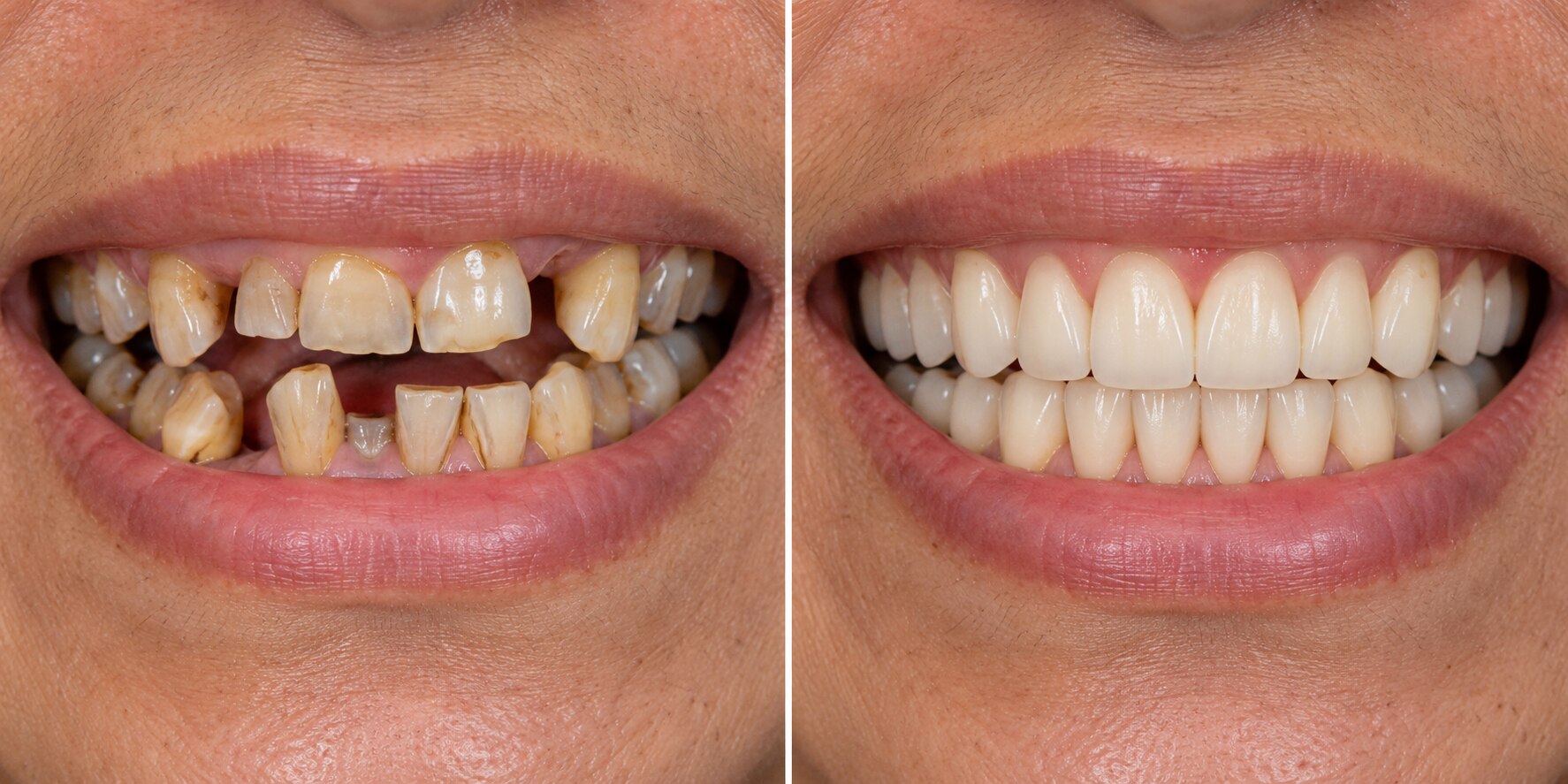
Consider full-mouth rehabilitation when problems involve many teeth, several areas affect one another, chewing has deteriorated, or isolated repairs would keep failing because the bite or underlying disease remains uncontrolled. Full-mouth rehabilitation, also called full-mouth reconstruction, is a coordinated plan—not one procedure or diagnosis.
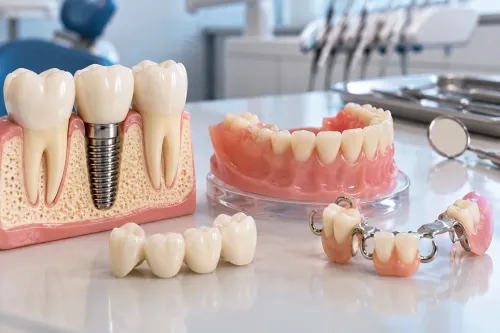
It may combine gum treatment, fillings, crowns, onlays, root-canal treatment, orthodontics, dentures or implants.
| Option | What it means | When it applies |
|---|---|---|
| Cosmetic smile designing | Mainly improves appearance | Teeth are healthy and function is stable |
| Routine crowns | Restores one or two damaged teeth | The problem is local and the bite is controlled |
| Dentures or implants | Replaces selected missing teeth | A space affects function, appearance or tooth position |
| Orthodontics | Moves teeth or manages space | Crowding, tilting or bite position needs correction |
| Single-tooth treatment | Treats one painful or diseased tooth | The problem has not spread to the wider mouth |
| Full-mouth treatment | Coordinates treatment across many linked problems | Repairs must work together to restore function and stability |
That is the routine crowns and bridges, replacements for missing teeth and full-mouth treatment distinction: each option has a different scope. A missing tooth, worn tooth or unattractive smile alone does not automatically require full-mouth treatment. Some spaces can be monitored; some worn teeth need observation or bonded composite.
Other damaged teeth need only a filling, onlay, crown or root canal—not a complete reconstruction.
The Warning Patterns and Causes That Raise the Question
Widespread tooth wear deserves a comprehensive assessment when it appears with shortening or thinning, severe erosion or abrasion, repeated fractures, chipped restorations, multiple large fillings, uneven contacts, reduced chewing ability, drifting or tilted teeth, or multiple missing teeth. These patterns can reflect one problem or several interacting problems.
- Identify the cause before rebuilding. Check for tooth-to-tooth attrition, bruxism or clenching, abrasive brushing, acid erosion and abrasion of teeth from acidic foods, drinks or gastric reflux, dry mouth, untreated decay, gum disease, trauma, developmental enamel defects and long-term wear.
- Treat the driver first. Ongoing acid exposure, reflux, dry mouth, clenching or poor hygiene can make new restorations wear, debond or fracture, even when the reconstruction initially looks sound.
- Do not assume that severe-looking wear proves loss of vertical dimension. Teeth can continue to erupt, while supporting bone remodels, preserving contact despite shortened crowns. Increasing the bite without confirming a functional need can create new discomfort or muscle and joint problems.
- Do not assume every worn tooth needs a crown. Depending on remaining structure, symptoms and wear rate, monitoring, bonded composite or partial-coverage treatment may preserve more tooth.
A clinician should investigate the pattern, its speed, symptoms and the health of the gums, roots and remaining tooth structure before proposing extensive treatment. Loss of chewing function, unstable contacts or repeated repair failure strengthens the case for coordinated assessment.
How a Dentist Decides Whether the Mouth Is Restorable
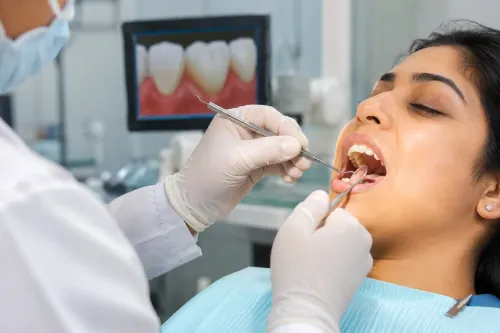
The full-mouth rehabilitation candidacy decision starts with prognosis, function, and your ability to maintain hygiene—not appearance alone. A dentist takes a medical and dental history, including medications, reflux, dry mouth, clenching, previous dental work, and treatment goals.
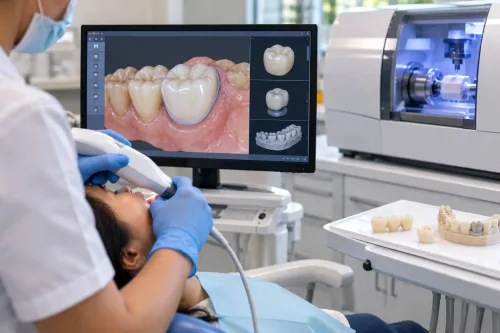
They record jaw-joint or muscle symptoms, then use bite analysis, photographs, study models or digital scans, and dental X-rays to map contacts, wear, infection, and facial proportions. If implants are considered, 3D imaging assesses bone volume and nearby anatomy.
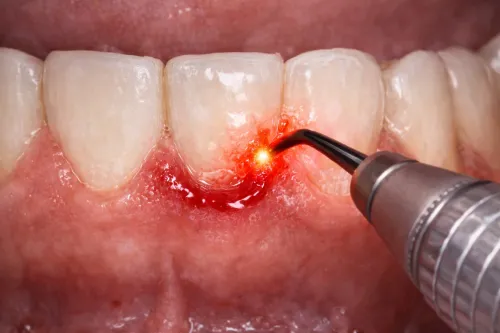
- Periodontal charting records pocket depths, bleeding, attachment loss, mobility, and bone support. Untreated gum disease can make an attractive reconstruction fail.
- A tooth-by-tooth restorability assessment checks decay, cracks, pulp, root disease, remaining walls, and whether the tooth can be isolated and maintained.
- Root-canal treatment is based on irreversible pulp inflammation, pulp death, or other endodontic disease—not simply because a crown is planned.
| Finding | Likely direction | Why |
|---|---|---|
| Healthy tooth with usable structure | Filling, bonded composite, onlay, or crown | The tooth can retain and protect its remaining structure |
| Damaged tooth with treatable pulp or root disease | Root-canal treatment followed by suitable restoration | Endodontic disease, not the crown itself, determines the need for treatment |
| Vertical root fracture, unmanageable crack, poor periodontal support, or too little remaining structure | Extraction and replacement | The tooth has an unfavourable prognosis and cannot reliably support a restoration |
Why Disease Control and Trial Restorations Come Before Final Work
Definitive crowns, bridges or implants should not be the first move. The full-mouth rehabilitation treatment sequence is staged so each step removes a cause of failure and tests the next decision.
1. Treat urgent pain, swelling or infection first. Control active decay, provide oral-hygiene instruction and complete periodontal treatment so bleeding, pockets and infection do not undermine later work.
2. Address reflux, frequent acidic foods or drinks, dry mouth and bruxism. If these drivers remain, restorations can erode, fracture, loosen or fail soon after placement.
3. Use temporary fillings, provisional crowns or other temporary restorations to test bite height, chewing, speech, appearance and comfort. This is bite testing before definitive restorations, not merely a cosmetic preview.
4. Add orthodontic movement when tilted or crowded teeth need repositioning, alignment or space management. Complete endodontic treatment when pulp or root disease makes it necessary, rather than simply because a crown is planned.
5. Plan extraction for teeth that cannot be saved, then assess bone management and implants where replacement is appropriate. Disease control before crowns bridges or implants protects both natural teeth and implant sites.
6. Reassess the bite, gums, comfort, hygiene and temporary restorations before making definitive crowns, bridges, onlays or other restorations. Final work placed over active gum disease, uncontrolled decay, infection or an unstable bite leaves the cause of breakdown in place.
A digitally planned, multidisciplinary assessment at Sri Krishna Multispecialty Dental & Implant Studio can help coordinate these decisions across restorative, periodontal, endodontic, orthodontic and implant care without assuming every tooth needs the same treatment.
Related services
Crowns & Bridges Rebuilding Smiles, Restoring Confidence and Function – Digitally and Precisely Full-mouth rehabilitation is a comprehensive dental treatment that... View service → |
Crowns & Bridges Precision-Fit Restorations for Damaged or Missing Teeth – Designed Digitally for Function and Esthetics Crowns and bridges are fixed dental... View service → |
What the Plan Should Preserve, Replace and Maintain
Preserve sound enamel and dentin before choosing full crowns. Worn teeth with usable structure may suit bonded additive composite, onlays, other partial-coverage restorations, orthodontic space management or monitoring. Full-mouth rehabilitation is proportionate only when these options cannot provide stable function or protection.
| Option | What it means | When it applies |
|---|---|---|
| Monitoring | Leave a space or worn tooth under review | Chewing, speech, appearance, migration and disease risk remain acceptable |
| Conservative restorative dentistry | Use fillings, bonded composite, onlays or partial coverage | Enough tooth structure remains for repair without full coverage |
| Crown or replacement | Cover a compromised tooth, or replace a missing one | Consider neighboring teeth, available space and bone, periodontal and systemic health, cost and preference; an implant or bridge is not automatic |
Extensive treatment carries irreversible tooth preparation, possible pulp complications, fracture, debonding, hygiene demands, time and maintenance. Ask about dental implants maintenance: implants still need periodontal control, daily cleaning and professional reviews. A bruxism night guard reduces damaging loading but does not cure bruxism. Discuss full-mouth rehabilitation risks and long-term maintenance before consenting.
- Which teeth are saveable, and why does each need fillings onlays crowns root canal extraction replacement?
- What caused the damage, and what happens if treatment is delayed?
- What will be tested with temporary restorations before final work?
- What recalls, hygiene plan and maintenance schedule will protect the result?
Frequently asked questions
When may full-mouth rehabilitation be needed?
It may be considered when several worn, damaged or missing teeth affect one another, chewing has deteriorated, or isolated repairs keep failing because bite problems or disease remain uncontrolled.
How does a dentist decide whether the mouth is restorable?
The dentist evaluates the condition of the teeth, roots, gums, supporting bone, bite, infection and remaining healthy tooth structure to determine which teeth can be preserved and which need replacement.
Why must disease control come before final restorations?
Decay, gum disease and infection can undermine new restorations. Treating these problems first creates a healthier foundation and reduces the risk of repeated treatment failure.
What should a full-mouth rehabilitation plan include?
The plan should identify teeth to preserve, missing teeth to replace, bite and chewing goals, trial restorations when needed, and the maintenance required to protect the results.
Related services
Crowns & Bridges Dental implants are the most advanced, reliable, and long-term solution for replacing missing teeth. View service → |
Pain (RCT) Save Your Natural Tooth with Comfortable, Painless Precision Endodontics Tooth pain, sensitivity to hot or cold, swelling, or deep decay are... View service → |
Bleeding Gums Gum Treatments (Periodontics) Healthy Gums, Healthy Smile – Advanced Care for Bleeding Gums, Gum Recession, and Bone Loss Gums are the foundation of... View service → |
Cosmetic Dentistry Cosmetic Dentistry-Smile Designing Cosmetic Dentistry Creating Natural, Confident Smiles Through Art, Science & Digital Precision A confident smile can transform not just your... View service → |