Dental implants depend on more than the implant itself. They require adequate supporting bone in the correct location. When a tooth has been missing for some time, or bone has been affected by infection, trauma, or periodontal disease, the available bone may not always be sufficient for straightforward implant placement.
This is where Bone Grafting Procedures may become part of dental implant planning.
Patients considering implants in Madhura Nagar, Hyderabad, often benefit from understanding why bone volume matters and why grafting is recommended only in selected situations.
Why Jawbone Can Reduce After Tooth Loss
Natural tooth roots transfer functional forces to the surrounding jawbone. After a tooth is removed, the bone in that area no longer receives the same stimulation.
Gradual changes in ridge height and width can follow.
Bone availability may also be affected by:
- Long-standing missing teeth
- Gum disease
- Previous dental infections
- Traumatic tooth loss
- Anatomical limitations
- Previous extractions
- Individual healing patterns
The amount of bone loss differs considerably between patients.
Why Bone Is Important for Implants
An implant needs sufficient surrounding bone for appropriate positioning and stability. Implant planning also has to consider nearby anatomical structures, the final crown position, gum tissues, and bite forces.
Simply placing an implant wherever bone happens to remain may not create an ideal restorative result.
Modern implant planning therefore begins with understanding where the replacement tooth needs to be and whether the supporting tissues can accommodate the proposed implant.
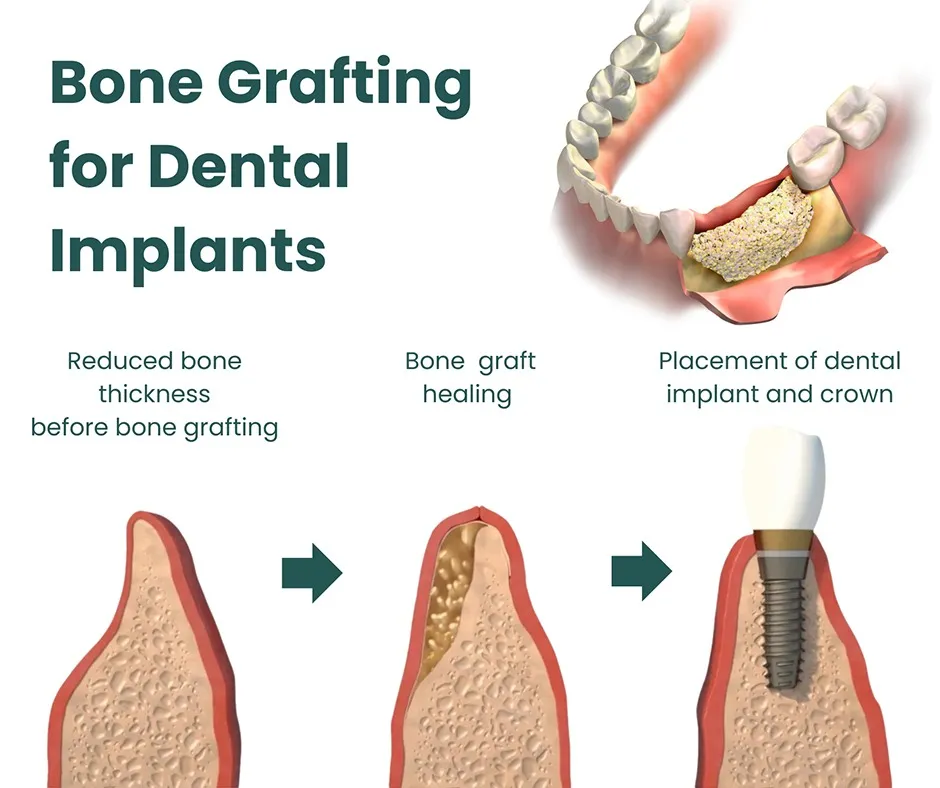
What Does Bone Grafting Do
A bone graft is used to augment an area where bone volume needs improvement. Different grafting approaches are available depending on the size and location of the deficiency.
Some procedures may be completed around the time of extraction. Others may be performed before implant placement, while certain smaller defects can sometimes be managed during implant surgery.
The appropriate sequence depends on clinical findings.
Is Every Implant Patient Likely to Need a Graft
No.
Many people have sufficient bone for implant placement without additional augmentation. Others may require relatively limited grafting, while more significant bone loss can involve a staged treatment approach.
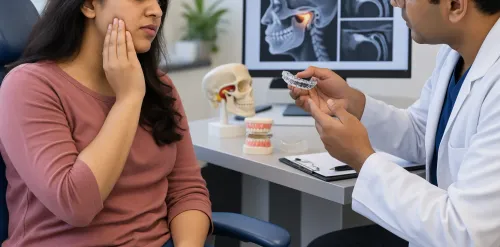
Assessment may include clinical examination and dental imaging. Three-dimensional imaging can be useful in selected implant cases because it helps evaluate bone dimensions and nearby anatomical structures.
What Influences Healing
Bone graft healing is biological and varies between individuals.
Factors that may influence healing include:
- Oral hygiene
- Smoking
- Gum health
- General health
- Extent of grafting
- Surgical site stability
- Adherence to postoperative instructions
This is one reason implant treatment timelines should be individualized rather than based on a universal schedule.
Questions Worth Asking During Implant Planning
Patients can ask:
- Is there adequate bone for the proposed implant?
- Why is grafting being recommended?
- What type of grafting procedure is planned?
- Will grafting and implant placement occur together?
- How will healing be evaluated?
- When can the final tooth restoration be considered?
These questions help patients understand the complete process instead of focusing only on the implant surgery.
At Sri Krishna Multispecialty Dental and Implant Studio, implant assessment can include evaluation of available bone, missing-tooth position, gum condition, and restorative requirements before treatment is planned.
For patients across Hyderabad, this detailed assessment is especially important when teeth have been missing for a long period.
Bone grafting should not be viewed as an automatic step in implant treatment. Its purpose is to create or improve the supporting foundation when existing bone is inadequate for the intended implant position. Good planning determines whether it is necessary, which approach is appropriate, and how it fits into the broader goal of replacing missing teeth.
Keywords