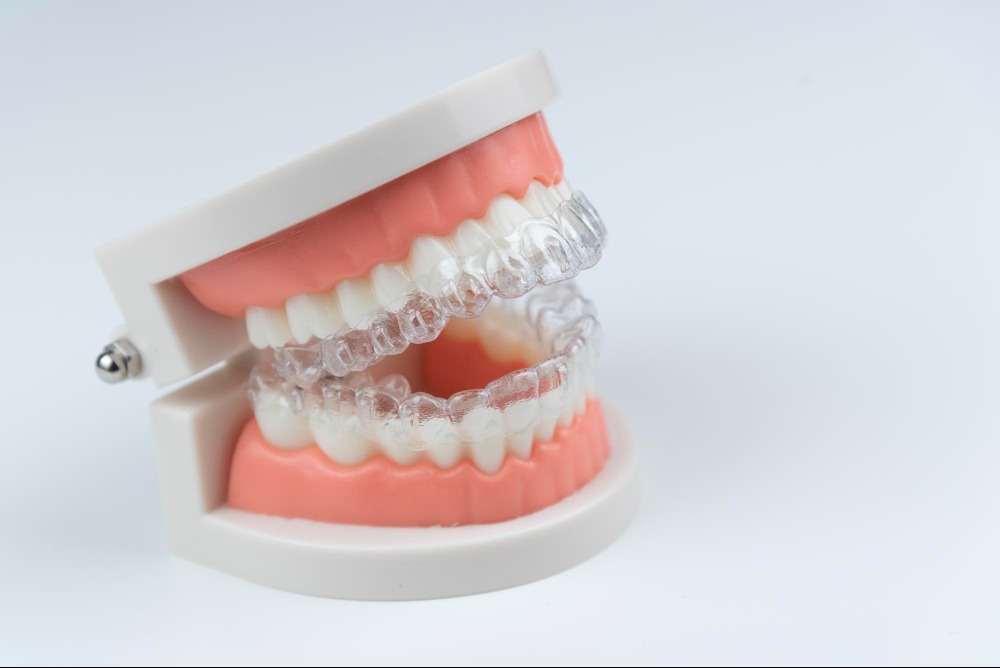
Clear orthodontic appliances have become increasingly familiar to adults and teenagers who want to improve tooth alignment without conventional fixed braces. Their discreet appearance can be appealing, but successful treatment involves much more than receiving a series of transparent trays.
Aligners gradually move teeth through a planned sequence of customized appliances. Whether they are appropriate depends on the type of tooth movement required, bite relationships, gum health, and patient cooperation.
For people considering orthodontic care in Madhura Nagar, Hyderabad, an assessment before treatment is essential.
What Problems Can Clear Aligners Address
Depending on case complexity and the system being used, clear aligner treatment may be considered for selected cases involving:
- Crowded teeth
- Spaces between teeth
- Rotated teeth
- Mild to moderate alignment concerns
- Certain bite discrepancies
- Relapse following previous orthodontic treatment
More complex orthodontic problems may require additional techniques or conventional braces.
The fact that teeth appear only slightly crooked does not always mean the orthodontic mechanics are simple.
Why a Dental Examination Comes First
Moving teeth through unhealthy gums or around untreated dental problems can create avoidable complications.
Before orthodontic treatment, the dental team may assess:
- Tooth decay
- Gum condition
- Bone support
- Existing crowns and restorations
- Missing teeth
- Bite relationships
- Jaw alignment
- Previous orthodontic history
Dental imaging and digital records may also be needed according to the case.
Aligners Depend on Patient Participation
Unlike fixed braces, clear trays can be removed. This is convenient for eating and cleaning, but it also places responsibility on the patient.
The appliances generally need to be worn according to the prescribed schedule. Frequently leaving them out can interfere with planned tooth movement and prolong treatment.
Patients also need to keep both their teeth and appliances clean.
Questions to Ask Before Choosing Treatment
Before starting, patients should understand what the proposed treatment is intended to correct.
Useful questions include:
- What tooth movements are planned?
- Is my bite also being corrected?
- Will attachments be needed?
- Is any space creation required?
- How will progress be monitored?
- What happens if teeth do not move as predicted?
- Will retainers be required afterward?
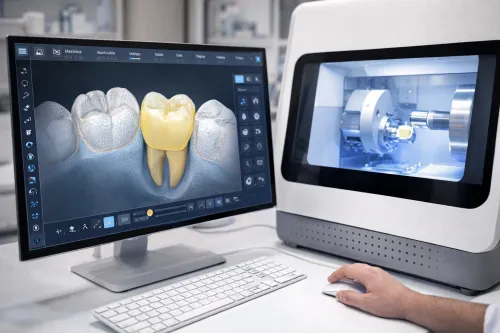
A digital simulation can help explain the plan, but it should not be viewed as a guaranteed representation of the final result.
Retention Is Part of Orthodontic Treatment
Teeth have a natural tendency to move after orthodontic correction.
Retainers are therefore an important part of maintaining alignment after active treatment. Patients who overlook retention may experience gradual shifting even after successful orthodontic correction.
This applies to both aligners and conventional braces.
Selecting a Provider
Convenience and appearance should not be the only factors when deciding where to undergo clear aligner treatment.
Patients should consider whether their treatment includes proper diagnosis, regular clinical monitoring, management of unexpected movement, and a retention plan.
At Sri Krishna Multispecialty Dental and Implant Studio, patients interested in clear orthodontic treatment can have their dental health and alignment evaluated before a treatment pathway is recommended.
For Hyderabad patients, this helps determine whether clear trays are appropriate for the actual orthodontic problem rather than selecting treatment purely because the appliance is less visible.
Aligner treatment can be convenient and aesthetically appealing, but the appliance itself is only one part of the process. Diagnosis, treatment planning, patient compliance, clinical monitoring, and retention collectively determine how well orthodontic treatment progresses.
Keywords